Neighbourhoods in practice: Sheffield

Across local government, there is growing interest in working at the neighbourhood scale as a way of delivering more relational, preventative and community-powered public services.
Over the coming months, we will be sharing how councils in our network, and their partners, are putting neighbourhood approaches into practice. Through a series of case studies and conversations, we’ll examine different models, the challenges they face and the lessons they offer for others.
Our second case study takes us to Sheffield, where the City Council is rethinking how it works with the people and places it serves.
In this Q&A, Tom Smith, Director – Customer Experience and Communities at Sheffield City Council, explains how they are explains how they’re redesigning services with local people and place-based assets at the core. This includes a new communities strategy, which sets out how the Council will build stronger relationships with communities and deliver more joined-up services, and a growing focus on neighbourhoods as a way of devolving power and decision-making closer to residents.
Neighbourhood working in Sheffield: at a glance
- Defining and delivering a renewed relationship with community organisations and groups where the Council meaningfully engages with and understands its communities.
- The delivery of joined-up, human services in the heart of communities.
- Better integration of services to respond to complexity, working outside traditional operational boundaries.
- Enabling neighbourhood governance that passes power to neighbourhoods, away from a centralised model of decision-making.
- If not implemented effectively, this way of working can lead to additional costs.
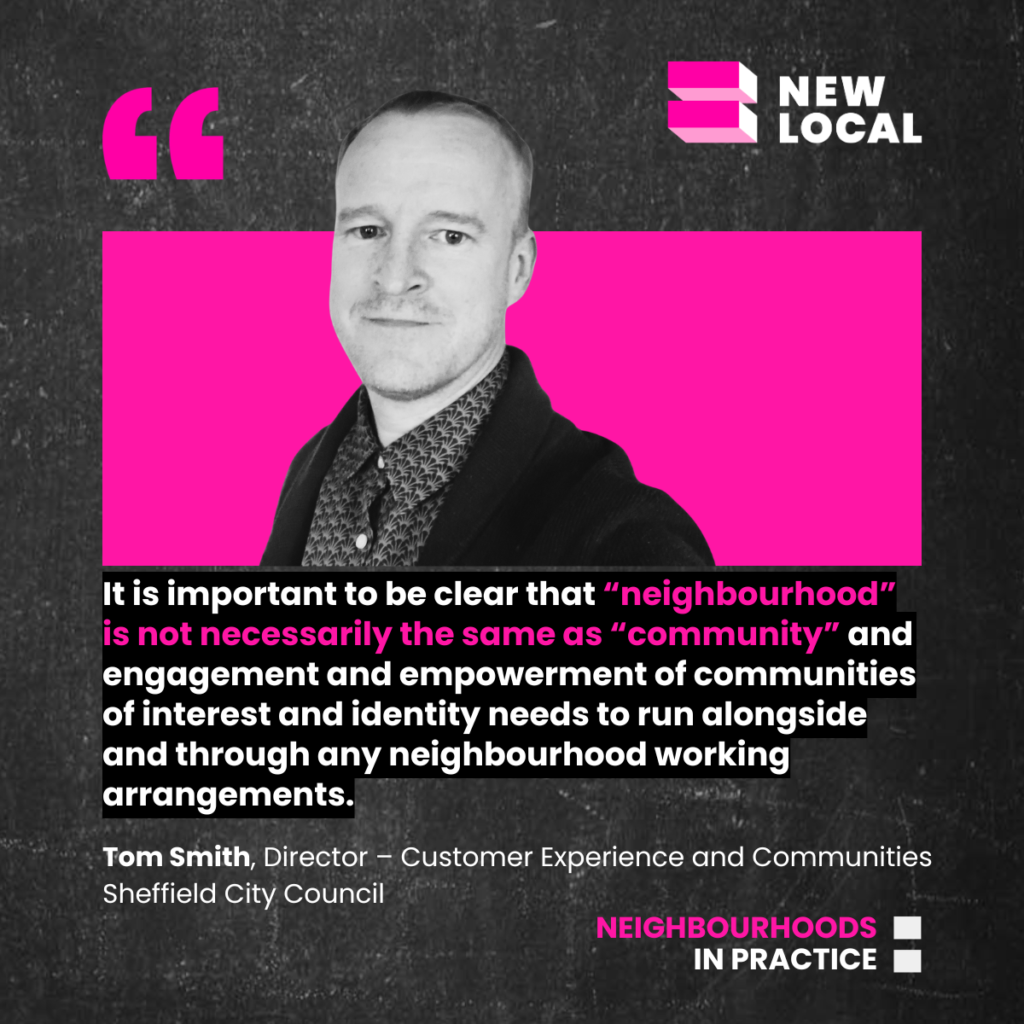
- “Neighbourhood” is not necessarily the same as “community” and engagement and empowerment of communities of interest and identity needs to run alongside and through any neighbourhood working arrangements.
What’s your approach to working with communities?
We know that not all of our communities are thriving or feeling safe. Sheffield City Council has acknowledged that we need to work in a different way to address these challenges.
Sheffield spent over a year developing a new Communities Strategy, which sets out how we want to change as an organisation and how we will do that, working closely with our communities. The Strategy was driven from a number of reviews of its approach historically, including the Street Tree Enquiry (Lowcock Report) which clearly set out that the Council had not listened and engagement effectively with our communities, and the Race Equality Commission, which set out the work required to become an anti-racist city and organisation. We have strong and diverse communities which support people, but they often feel disconnected and unsupported by the Council. Most importantly, the Strategy was coproduced with a number of Voluntary, Community and Faith Sector organisations and representatives, to ensure that it reflected the feedback from the communities of Sheffield.
The Strategy itself sets out a number of priority pieces of work including:
- Defining and delivering a renewed relationship with community organisations and groups
- Improving how the Council meaningfully engages with and understands its communities
- The delivery of joined-up, human services in the heart of communities
- Investing in Sheffield’s communities and working with them to best define the focus of investment.


How does this link to devolving power to neighbourhoods?
Prior to this, Sheffield had undertaken a piece of work in partnership with the city, to develop City Goals (Sheffield City Goals). These goals, which are owned by the Sheffield Together Partnership, not just the Council, include a strong focus on Neighbourhoods through the Neighbourhood conversation work. This work seeks to identify the neighbourhoods which residents most associate with and then, to work to devolve power and decision making into those areas. The Communities Strategy work we described previously supports this work and we are using this as well as practical examples to support this ambition.
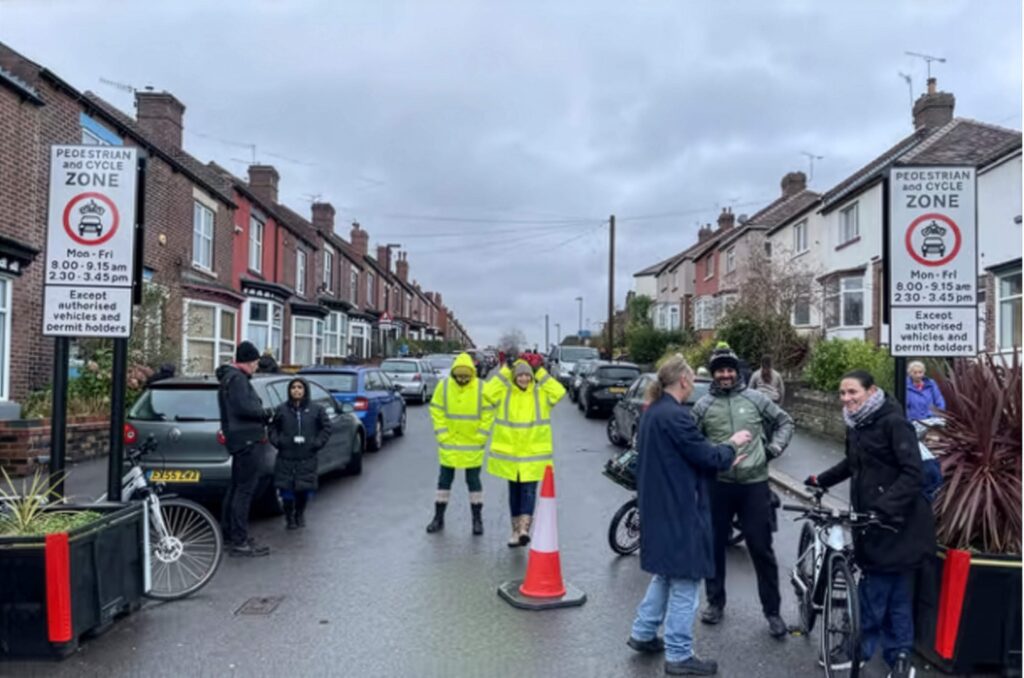
In particular, we have Neighbourhood governance arrangements in place in Gleadless Valley, and we are working hard to implement two Pride in Place areas in Parson Cross and Batemoor, Jordanthorpe and Lowedges.
Sheffield has had Local Area Committee structures for a number of years, which are highly valued, but are limited in their ability to make decisions in their local areas. Our approach to LACs and to Neighbourhood governance will be reviewed over the year ahead to seek to address some of the challenges we have in that area.
What are the major opportunities for councils in using ‘neighbourhoods’ as an organising principle?
There are significant opportunities to:
- Better integrate services and ability to respond to complexity outside of traditional operational boundaries.
- Enable needs-based allocations of resources based on data and feedback from our communities.
- Support genuine engagement and empowerment of communities.
- Enable neighbourhood governance to take place in a way that passes power to neighbourhoods and away from a centralised model of decision making.
What are the challenges of working this way?
If it is not implemented effectively, it can lead to additional costs; however, this should be able to be overcome through proper integration of services and prioritisation of resources.
It is important to be clear that “neighbourhood” is not necessarily the same as “community” and engagement and empowerment of communities of interest and identity needs to run alongside and through any neighbourhood working arrangements.
How could systems be changed to enable ‘neighbourhood working’ to be more easily integrated into council delivery?
Neighbourhood governance is key to this, and the ability to devolve budgets to local areas and have flexibility of expenditure is important. Pride in Place is showing the way, and we are looking at how we learn from that initiative to develop our approaches to neighbourhood working. Making sure neighbourhoods and communities have the skills, time and space to be involved is also critical, so our investment in community development will be important to make the system work effectively.
Interested in learning more about neighbourhood working, read Turning neighbourhood momentum into lasting public service reform.
Neighbourhoods are having a moment. Our recent blog explores why they matter and what that means for the future of public service reform.
 Join our mailing list