Neighbourhoods are having a moment. Let’s not lose what makes them powerful.

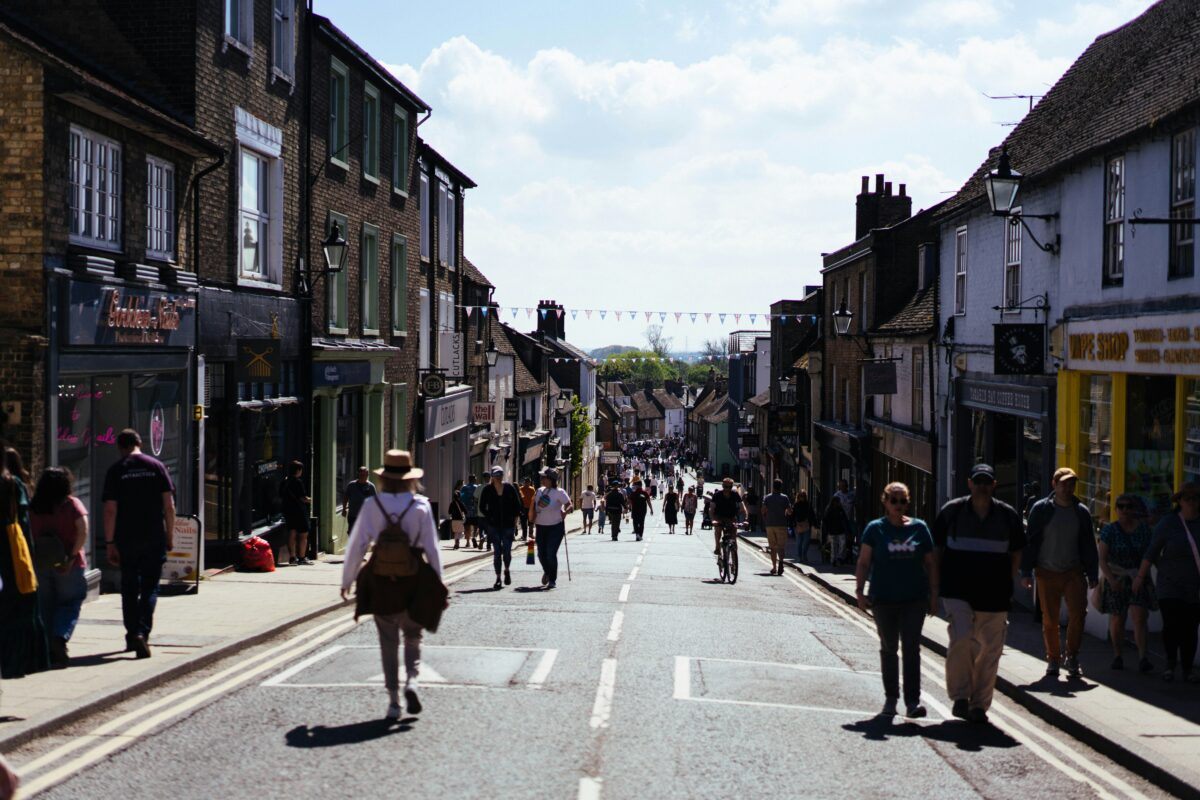
“This must become a country where every community feels listened to and respected, where every neighbourhood is a place to feel proud of, a place to call home.”
The closing words of Steve Reed’s speech at last week’s LGA Conference captured both a deeply human truth and an important policy shift. Our neighbourhoods matter because they are a part of what shapes our lives and, as the Secretary of State’s speech shows, they are fast becoming the lens through which we see the future of public services.
From double devolution to NHS Integrated Neighbourhood Teams, there is now irresistible momentum behind organising services closer to the communities they serve. But there is also a risk that, as neighbourhoods become the latest organising principle for public services, we take the ‘easy win’ of simply moving teams or services into neighbourhoods. If that’s all we do, we will miss a much bigger opportunity to redesign, not just how our services work, but what they are for.
That is why we’re particularly pleased to be publishing a new guest paper from Lisa McNally and Cormac Russell, with an introduction from New Local’s Chief Executive, Anna Randle. The paper explores one vital dimension of this conversation: the relationship between neighbourhoods, health and prevention.
Neighbourhoods are the places where relationships are formed. They are where people build trust, support one another and create the networks that help them navigate everyday life. Those relationships are not a nice extra to public services – they are the foundation of good lives. Relational public services start from this understanding, working with the strengths, relationships and networks that already exist in communities rather than seeing people simply as users of services.
When my neighbour’s wife passed away last year, it wasn’t public services that wrapped around him. It was nearby friends dropping in for a cup of tea, familiar faces stopping to chat when he visited the local library, and neighbours like me keeping an eye out for him. I have no way of knowing if, without that first line of defence, my neighbour would have needed more formal support, but I am grateful to live in a place where strong relationships may have acted as a powerful form of prevention, without us even knowing it.
Sadly, the same is not true everywhere. Many of the everyday networks in our neighbourhoods have weakened over the last fifty years. Levels of civic participation and social connection have declined, and, as a result, statutory public services – already under significant pressure as funding has diminished – have had no choice but to pick up the pieces. But services can’t ever replace the human relationships that help people belong, contribute and flourish.
That doesn’t diminish the importance of public services. Should my neighbour have needed mental health support, he would have been able to access appropriate professional services to provide it, and rightly so. It does, however, change how we think about the role that services should play in neighbourhoods.
When people need support, services should work with the grain of neighbourhoods rather than around or even against it. This happens when service providers are able to understand the strengths, relationships and assets that already exist in a neighbourhood and can help people reconnect with their communities while providing the support that only public services can offer.
We already see this in approaches such as social prescribing, community connectors and neighbourhood-based teams that work closely with schools, GP practices, voluntary organisations and local residents. At their best, these approaches don’t simply deliver services closer to home. They strengthen people’s connections to the places they live.
This is why it is important not to think of informal and formal forms of community support and services delivered by the state as separate worlds. Rather than being a binary, they sit on the same continuum, and when they are at their best they are porous – feeding and learning from each other in a dance of mutual reinforcement that makes a greater whole.
Thriving neighbourhoods need both strong communities and relational public services. One without the other will only ever achieve part of what’s possible. Community organisations, social enterprises, resident groups and local volunteers build trust, create opportunities for participation and often spot emerging needs long before statutory services do. Meanwhile, public services bring areas of professional expertise, resources and the ability to respond when more intensive support is needed – and work even better when they really take the time to listen, understand the person or family and shape their support in ways that truly meet people’s needs and connect them back into their neighbourhoods.
The real prize comes when these worlds work together, guided by shared relationships, local knowledge and a common understanding of what matters in that place.
This is also how we need to think about neighbourhood teams. Their value doesn’t come simply from bringing different professionals together in one place. The real opportunity lies in enabling them to work relationally: understanding local communities, connecting people to the strengths around them and helping rebuild the networks that make social support possible.
But this work is not solely the preserve of frontline services. Local government has a vital role in creating the conditions for strong neighbourhoods by stewarding local economies that support a thriving civil society. Using approaches such as community wealth building is just one route by which local governments and other public sector institutions can encourage the growth of the social enterprises, community businesses and voluntary sector organisations which provide the social infrastructure that allow relationships to flourish.
Seen this way, neighbourhoods become much more than a delivery model. They offer a way to connect community power and place-based, relational public service reform into a single agenda. They encourage us to organise around places rather than organisational silos, bringing together health, social care, housing, education, policing, regeneration and economic development around the realities of people’s lives. And they provide the ideal environment for learning: places where new ideas can be tested, adapted and grown through close relationships between communities, practitioners and policymakers.
These are exactly the questions we’ll be exploring later this year, when we will be bringing together leaders and practitioners from across local government, health, housing, policing, civil society and beyond to think about what it will take to make this vision a reality. Details of this event will be available soon, and we hope it will be another step towards building a shared understanding of what makes neighbourhoods uniquely powerful.
Photo by Phil Hearing on Unsplash.
 Join our mailing list