Tackling health inequalities from the ground up

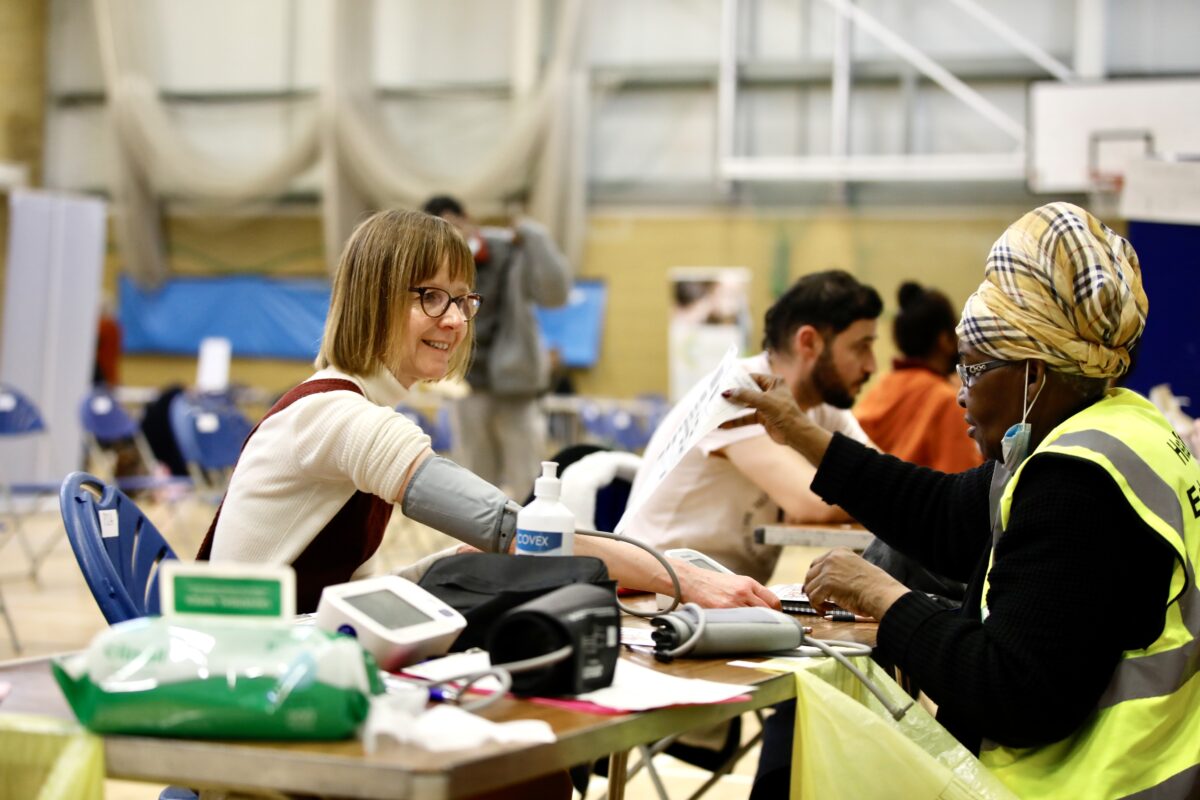
We sat down with Nipa Shah, programme director of Brent Health Matters, to find out how this emergency response initiative, which began in 2020 at the start of the pandemic, has evolved to address deep-seated health inequalities in northwest London.
She describes how it has been a journey of building trust with the community, working closely with council leadership, shifting internal mindsets, and discovering how a community-first approach to public health can improve lives.
What led to the creation of Brent Health Matters, and how did the pandemic shape its mission?
“Health inequalities have always existed in Brent, but the Covid pandemic truly shone a spotlight on them. Brent suffered very heavily during the first wave; we had one of the highest numbers of recorded cases and one of the highest death rates across England,” says Shah.
“For instance, on just one road, we lost 43 residents; they were often men, the main breadwinners in their families, aged in their 40s and 50s. Many were from more challenged socio-economic groups and BAME backgrounds, and they often held frontline jobs such as bus drivers, hospital porters, etc.
“When a local Somali organisation spoke out publicly about their suffering, we realised we needed to do something differently, and that’s where the Brent Health Matters programme was born.
“We put together a business case for forming a dedicated team to focus on tackling these health challenges. I was part of writing that proposal and have been part of Brent Health Matters ever since.”
Describe the challenges you faced in going beyond traditional healthcare approaches.
“When we started, trust was a big issue. The communities we wanted to reach didn’t always trust health or council services.
“Honestly, I was quite naive. I had always worked in a hospital, and thought that because we were health service, people loved us. But they didn’t, which was a huge shock to me. People said they didn’t really want to talk to us.

“I realised the classic thing the health service does is say: ‘This is what I think is wrong with you. Let me fix it. But communities knew what they wanted. They had amazing strength. What they really wanted was for someone to really listen to their concerns and involve them in trying to find a solution.
“It was a new way of working for us to go out and ask people what they needed from us.
“Our biggest asset in bridging this gap was recruiting community champions. We asked around 45 interested residents to become the voice of the community on health issues. These champions came from the communities we were trying to reach and accordingly reflected the diversity of those communities. Brent is one of the most diverse boroughs in the country and just one of two boroughs in the UK where more than half of the population are born outside of the UK.
“Most of our staff are also recruited from the community. So, between our champions and staff, the team can speak about 26 languages. Having health messages delivered by somebody who looks like you and talks like you makes a big difference.”
What specific health areas did you focus on next, and how did you broaden your scope to include issues beyond clinical care?
“Early on, we focused on practical help, like translating government information into different languages and making sure our communities understood the Covid restrictions. We also held webinars for different communities, hosted by faith and community leaders from those communities, created other culturally appropriate communications such as videos in different languages, monthly radio shows on local stations targeting specific audiences, TikTok and Instagram live events and even made a film hosted by a local celebrity.
“Then, we focused heavily on vaccinations and set up community clinics for their delivery, because people were reluctant to come into traditional GP practices. One at a local mosque delivered over 100,000 jabs.
“After the pandemic, we focused on diabetes. This condition is highly prevalent in Brent due to our high number of ethnic minorities, and existing conditions such as diabetes worsen Covid outcomes.
“We found there were huge knowledge gaps and myths around diabetes. In some languages, there wasn’t even a word for it. People called it a ‘sugar disease’.

“So, we went out to places such as faith centres, leisure centres, high roads, factories, barbers, and nail salons — anywhere people go — to talk about this condition, and encourage them to be screened and provide information on how to manage this condition.
“We soon found that while people were concerned about their health, if they were more worried about the cost of living, housing, employment, or education, then their health would take a back seat.
“So, we started taking out council teams from housing, employment and adult social care as well, and adapted our health outreach to cover other things communities requested, such as dementia, heart diseases, menopause, etc.
“Post-pandemic, mental health was a huge issue. Early on, I remember an elder from our Black community turning around and saying, ‘Mental health? Nah, that’s a white man’s disease’.
“Now, two years later, we are doing co-production with community leaders trained in mental health first aid, and they are inviting us to talk about mental health in young people and elders. It’s been very satisfying to see that change, as talking about mental health was a huge taboo.”
How have you demonstrated the impact of your approach?
“It can be difficult to prove the impact of our programme because tackling health inequalities takes a long time, and some metrics, like life expectancy, are hard to track quickly. But we know we have had successes.
“By increasing awareness, being more flexible in our approach and conducting home visits, we increased our annual diabetes reviews from 23% to 80%.
“We also track the impact of our community outreach. For example, we can look at how many of the residents we escalated to their GPs following high blood pressure readings are then diagnosed with hypertension.
“Those diagnoses are our success, as it’s likely that those individuals wouldn’t have been detected, diagnosed and given treatment if it weren’t for these events.
“Another success has been our work on bowel cancer screening awareness. Within Brent, there was a difference of 12% in uptake between our most and least deprived areas.
“After nine months of two-pronged work—community awareness training and personally calling up non-responders—we shifted that difference to 9%. A 3% shift is huge in terms of people impacted.
“That said, it’s often tricky to prove impact, especially when we are measuring something that didn’t happen, such as preventing a stroke.”
What advice do you have for other teams looking to adopt this community-focused way of working, and what is your core advice for those starting out?
“Our biggest challenge has been getting health and care providing teams to buy into this way of working, because avoiding emergencies in the future is often viewed as additional work. However, we’ve had great success with our Adult Social Care team.
“After much persuasion, we did a community assessment day where social workers and occupational therapists came out to a community leisure centre to see 100 people on their waiting lists.
“There was such a positive buzz that managers realised they needed to do this more often.
“The public said the event made it easier for them to talk to a real person, get all their services in one place, and they appreciated the familiar surroundings.
“To make this sustainable, it is essential to have senior leadership saying, it’s okay to do things differently and lead by example. For instance, our corporate director was moving tables and making tea at the first community assessment day.
“If a peer were starting now, my advice would be to start small and actually go to our communities and ask them what they want.
“Communities’ expectations are often very practical. They don’t ask for GPs to be available to them every evening, but they do want someone who can fully understand them, or use interpreters, when they call.
“We have to accept that these are not residents or communities that are hard to engage with; we are just hard to access. We don’t make it easy. If you are serious about tackling health inequalities, be flexible, pilot small stages, and harness the community’s own answers and resources.
“The final point I would make is that from a system perspective, taking an integrated approach is not only key to addressing health inequality issues, but is also cost effective. It can be difficult to appreciate the impact of working in this way sometimes, but we know that preventative measures ‘upstream’ will mean significant savings in the future, because someone has managed their health and has not required difficult and complicated interventions later on in acute settings.
“It is both interesting and gratifying to see that the three aims outlined in the NHS ten-year plan – to shift care from hospital to community, analogue to digital and sickness to prevention – are all integral to the BHM model and how it works.”
Image Credit: Photos from Brent Council of Brent Health Matters programme
 Join our mailing list