How We Did It: Embedding co-produced activities in hyperlocal places of trust
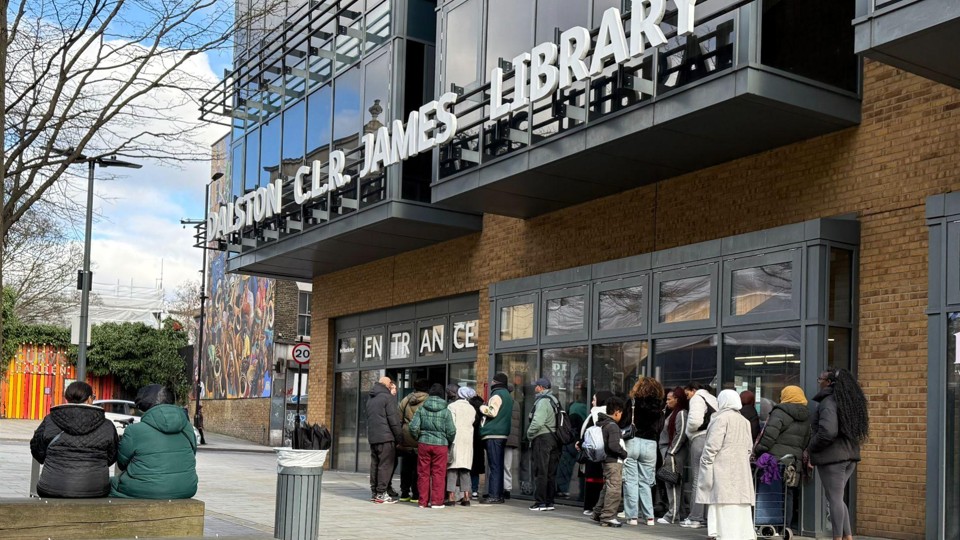
Some of the most powerful public service reform starts in the places people already feel safe. Where better than to pilot neighbourhood ways of working across services than through libraries.
At our recent How We Did It session for New Local members, we heard from Petra Roberts, Assistant Director for Culture, Libraries and Heritage and her colleague Emma Winch, Head of Cultural Transformation at Hackney Council about their iterative work in Hackney’s libraries over the past couple of years.
In this article, Petra and Emma share some of the background to the work and their key takeaways:
The borough of Hackney and our libraries
Like many London boroughs, Hackney is an example of a blend of mixed cultures and fortunes. On one hand, Hackney has developed into a thriving borough, which features a healthy business economy, excellent schools, beautiful parks, and award-winning cultural services. On the other hand, 28% of our residents and 43% of children face structural disadvantage.
Libraries play a crucial role in bridging this divide, offering free and welcoming spaces where every resident can access support, learning, and culture — whatever their circumstances. They’re key infrastructure and trusted access points in our neighbourhoods, notwithstanding their statutory responsibilities.
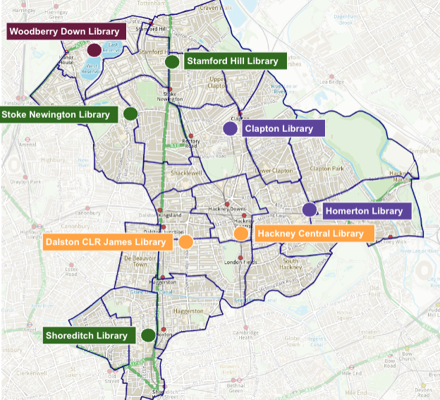
Hackney’s libraries are hyper-local and evenly distributed, so they’re no more than one mile from where residents live. They often cover two to three wards, matching neighbourhood catchments quite well. Since Hackney closed neighbourhoods’ offices, we have seen a large increase in residents using local libraries to engage with council services.
One of the powerful libraries stats, from the Ipsos Veracity Index, show that librarians are consistently ranked among the top five most trusted professions in Britain.
Why libraries
Because of the flexibility and open nature of libraries, we have started to invite residents who come into the library building, to engage with a wider range of services, which enables us to build an ongoing relationship with people from all ages and backgrounds.
Our libraries support a wide range of diverse groups — refugees, older residents, children, students, families, and people in hardship — and every day we see the ‘no wrong door’ approach in practice. Libraries are already quietly doing integrated work such as, literacy, digital inclusion, job support. As warm, welcoming spaces, they also provide signposting and health advice, meeting multiple needs at once and reducing pressure on statutory services as part of the early help and prevention cycle.
‘More than a library’
In 2022, we set ourselves an ambitious four-year strategy to make our library service ‘more than a library’. We wanted to go beyond books and our core service offer following the pandemic. Our goal was to modernise what was quite a traditional service that hadn’t seen change in decades. Our goal was to accelerate footfall back into our libraries. In the summer of 2021, we engaged with 8,500 stakeholders and staff to co-design a new vision that puts libraries at the heart of the cultural life in our borough. To become a highly effective library service team meant that we had to engage with and serve the most disadvantaged community groups in society; career, and skills training for young and old and the promotion of health and wellbeing.
We took a person-centred approach, and all of this could only be achieved with the most engaged, skilled, and motivated workforce. So, the focus on the workforce transformation was to align with our other cultural services. We wanted to create a horizontal structure, which enabled leadership at every level of the workforce, with better pay, staff training and progression, while empowering staff to lead the work themselves.
Hyperlocal approach
In 2022, we formed a new cross-cutting engagement and development team with the initial aim of bringing culture, heritage, and library services closer together. The team’s remit included digital transformation, marketing and promotion, engagement, outreach data, performance analysis, staff development and workforce culture. However, in recent years, an emerging priority for this team has been creating dynamic, but secure spaces for council delivery in our libraries.
Working collaboratively is fundamental to our approach involving both the wider council and VCSE partners, and we’ve been using our data and user insights, primarily gathered through libraries, to inform and pilot co-located council service delivery models operating within library spaces.
Data gathering
Over the past year, the team has played a crucial role in gathering and sharing local intelligence with public health, consultation and policy teams. This intelligence includes identifying emerging local issues and recognising broad trends like digital exclusion, and social isolation, and collecting direct resident feedback.
The extensive data and local knowledge we collected have allowed us to precisely target our efforts and its reaping benefits for both the council and our libraries.
For instance, by focusing on Homerton Library, an area with identified deprivation and health needs, we’ve achieved a 30% increase in library footfall. We actively partner with residents and library users to co-design our programmes, our library spaces, and our creative initiatives across wider neighbourhoods. This collaborative approach guarantees that our libraries and the surrounding areas are welcoming, accessible, and cultivate a strong sense of community ownership among those who use them.
Whilst our library user base largely mirrors the demographics of the local area, we are continually striving to increase inclusivity and outreach to residents, further informed by the gaps that we see in this data and insight. Our data isn’t static, we update it regularly and proactively use ward demographic data to shape both our book stock and our programming, ensuring our spaces are welcoming to current residents and appealing to new communities. To develop creative programming and tailored support services, we partner with organisations that have relevant lived experience or a deep understanding of the communities that we serve. And this new collaborative approach better positions us to support existing users and to engage new customers.

Examples of projects in libraries
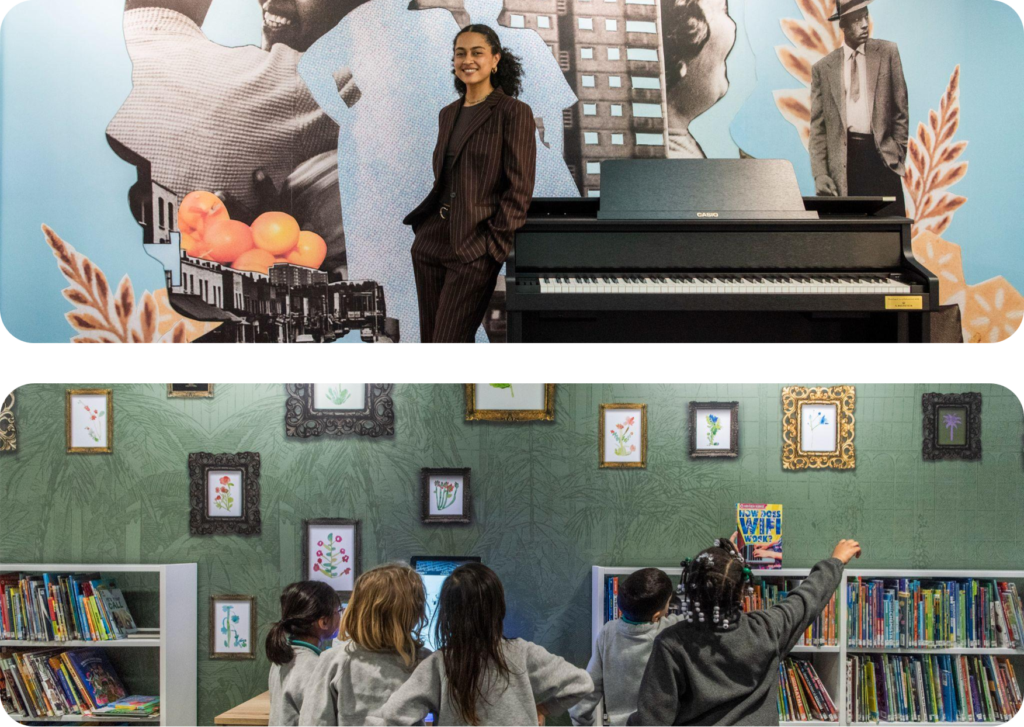
- This year’s work has included new co-design murals and mosaics in libraries created with local people, library users, and the council’s regeneration teams, as well as a complete redesign of one of our largest libraries — a project informed by the input of young and older people, and students with special educational needs and disabilities.
- We’ve also retained the same number of books throughout the years, which is incredibly important.
- We’ve are introducing accessible technology and furniture and features co-designed with young people and artists, community exhibition spaces, improved study space for young people, and modern meeting spaces with booths for phone and video calls to our libraries to our libraries.
- We also work directly with customers to co-design new programmes to respond to the needs we see in our libraries every day. One outcome was male attendees of our coffee morning successfully launching a chess club and a new chess competition at one of our libraries.
- A request from teachers at an Orthodox Jewish special needs secondary school led to a bespoke work experience placement in one of our libraries and we host supported volunteering for young people and adults with SEND across all our libraries.
- Young people who study in our libraries every day are now actively co-designing projects with artists and staff. Knitting clubs, which began as social crafting groups, have evolved into something even more meaningful, producing items for premature babies at the hospital and for the refugee hub.
Promoting to other services
We use our data to tell compelling stories to other council departments about how libraries reach residents. For those that struggle to reach local residents and for people who don’t engage with council services online or via the service centre, our findings are particularly helping to highlight the risk of further excluding these residents if services are moved fully online. We’ve developed library profiles and customer case studies by comparing borough data with library customer data. We update these annually to show how libraries serve diverse local communities.
Partnerships in the community
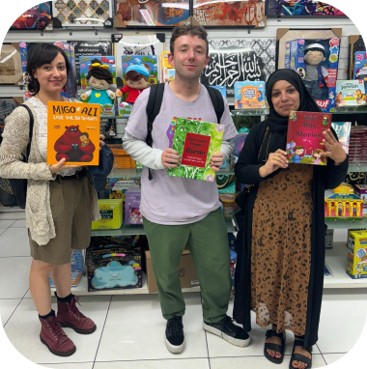
A key element of our model is a dedicated library offer in the refugee welcome hub, our colleagues in Welcome Hackney run out of Dalston CLR James Library. On a weekly basis, a member of the engagement team and a library officer join housing and immigration specialists, bringing books in community languages and run activities for the children attending with their parents. This connection is vital as it encourages clients to engage with the library, joining us as members, staying on after their hub visit, and returning to use the PCs, the Wi-Fi, and access our free events, opportunities that aren’t available at a council service centre.
Through the hub, the council not only delivers essential support for vulnerable groups, but also connects them with safe, free, and trusted community spaces in their neighbourhood.
Impact
We have so many success stories demonstrating the impact of our programmes. A few of them are:
- We’ve collaborated with adult social care to run a weekly welcome hub for refugees, asylum seekers and migrants. The hub provides essential refugee support, including assistance with grants, asylum appeals, E visas, immigration and legal advice alongside crucial services like food vouchers, SIM cards, and housing advice.
- Together with partners, we deliver six health and wellbeing programmes out of Homerton library, and this year we had a 115% increase in residents accessing health and wellbeing programmes via our libraries, which is over 7,000 people a year.
- Our work to support employment and skills across our libraries offers 14 distinct employment and volunteering programmes. And last year we supported over 200 individuals through these programmes.
- Last year, we ran tailored digital sessions for older people and digital buddies drop-in sessions with staff, volunteers and colleagues.
- Our partners at Migrant Organise who deliver casework and outreach services in the asylum hotels in Hackney recently provided feedback to the authority about the hub. They named the hub as a particularly valuable way that the council uses its power. They also said they haven’t come across another local authority area opening up in this way, and it takes a lot of bravery to do so.
We really appreciate this feedback because one of the challenges we face with this work is how resource intensive it can be for the council at a time when many directorates are having to cut back on staff and the face-to-face casework.
Demonstrating impact is an ongoing challenge, but we’ve spent the last few years collecting case studies and conducting evaluation with partners and participants. Public health teams trained us in ripple effect mapping. And this year, we’ll be partnering with public health and UCL on a nine-month study aimed at measuring the economic impact of these programmes and the long-term savings for the authority and the NHS.
Working together for residents has brought so many benefits for our libraries, our partners in the VCSE sector and for the local authority. Some of the highlights include partnership working, and co-location of services within libraries which have directly led to increases in both library membership and book borrowing. We supported the local authority and VCS partners to reach and engage more residents in their programmes and support services. The greater awareness of libraries among communities and council leaders fostered by these new ways of working, has resulted in increased income generation and capital investment in our libraries.
Trialling new service delivery models or using already paid for community assets is yielding impressive results for the local authority, with a significant increase in older people using support services and more residents accessing health and wellbeing support through our libraries.
Lessons learned
This work is a continuous evolution, and we’ve learned some key lessons as we’ve gone along. The reality is that the work is ongoing and has to be very dynamic, especially as Hackney, like all councils, navigate financial pressures and competing priorities.
- Our focus has been on developing pilots and business cases that we can very quickly align with system-wide needs.
- Using the data we collect to tell local stories about this way of working and this mindset of continuous evolution and using our libraries as a test bed for pilots has been essential.
- A core part of this learning journey has been seeking external validation and proactively advocating for this work. For instance, we successfully delivered a fully funded LGA Libraries peer challenge, which gave us an independent evaluation of our community hub approach. And the reports, from the LGA Peer challenge were highly positive, praising our work with underrepresented communities and agreeing essentially that the transformation should turn libraries into modern community focused resources.
- We ensure that we publicly celebrate major achievements, we enter a lot of our projects to international awards. We showcase what the library service does in council wide newsletters at the Chief Exec Road Show, and we extend our, events, invites, to the chief executive and the corporate leadership team so they can witness the work firsthand.
- We have also learnt that we require teams with strong collaboration skills and user insights. Our tip is to identify and engage those early adopters, people who can anticipate future trends within the team but also across council directorates, to develop pilots.
There is growing recognition nationally of the strategic capacity of libraries to operate as community hubs across neighbourhoods, but the transformation brings opportunities and challenges, not least for those working in and leading library services. And so, we are thinking about how we can bring our staff along for this channel shift, that we are planning.
Over the next year or two, we are working with Professor Steven Griggs and the Centre for Business Innovation and the Regions at the University of Staffordshire on a new research project that will better understand what the community hub model actually means for libraries and practice. And in doing so, it will generate guidance on how we can best navigate the transformation to meet the shifting demands of communities and the neighbourhood governance around it.
Future plans
In Hackney, we are convening a cross-council and VCSE working group that will develop options for a hybrid model for neighbourhoods. This effort is focused on the reality that inequality is a real and persistent issue in Hackney with some communities becoming almost entrenched in poverty. Therefore, the Borough-wide work is about organising support in a way that helps us respond to that earlier, more consistently and in a way that works for residents.
Our work does not create new buildings or new bureaucracy. It uses trusted local libraries as essential neighbourhood infrastructure and a delivery platform to make it easier for residents to access support early and locally.
Our next step is to develop how we build hyperlocal approaches right across the Borough to create a cohesive, Borough-wide strategy.
Photo Credit: Images supplied by Hackney Council
 Join our mailing list