How We Did It: Building solidarity through action – a route to community cohesion
Learning from Adur and Worthing on strengthening solidarity across places by supporting community-led action, building relationships in neighbourhoods, and creating simple ways for people to make a difference. This work is about making it easier for people to act, connect, and shape the places they live — and doing so in a way that can scale.
At a recent How We Did It session for New Local members, Noel Hatch, Assistant Director for People and Change at Adur and Worthing Councils joined us to discuss their work around rebuilding trust and connection within their communities.
Here Noel shares some of the background to the work and his key takeaways:
Thriving together through participation
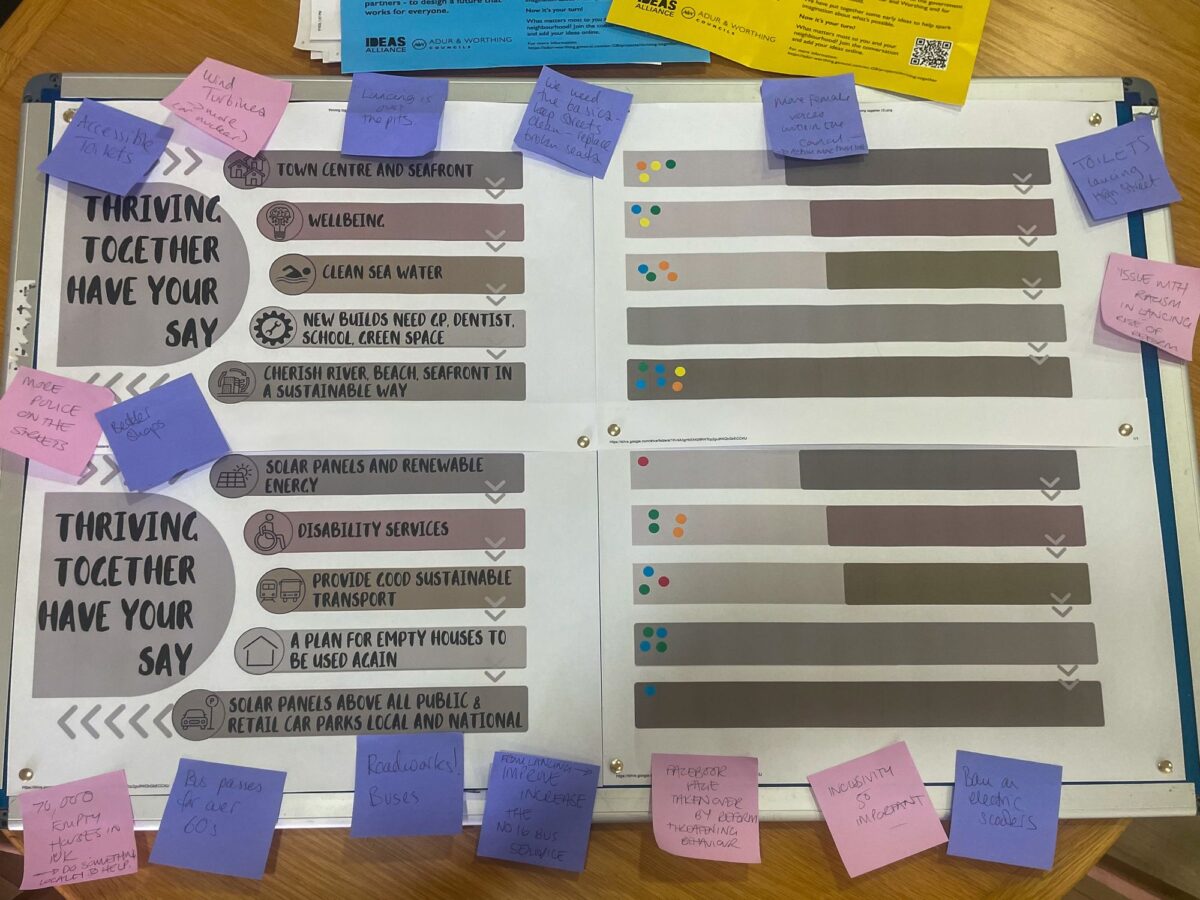
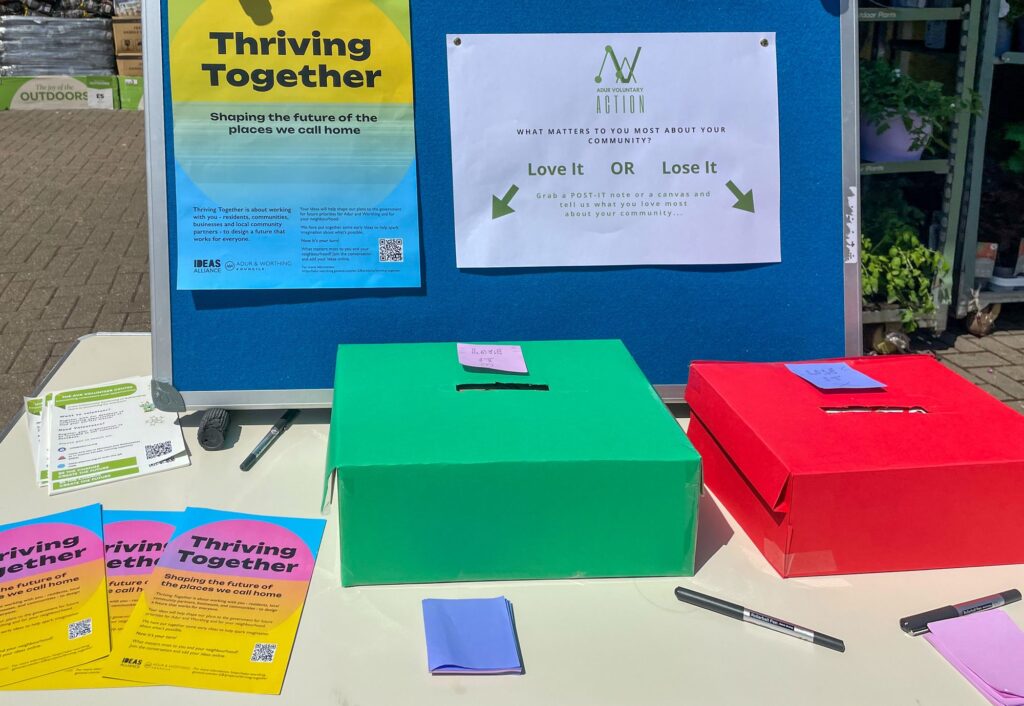
We refreshed our wider cohesion and participation work last year through a programme called ‘Thriving Together’. Part of the aim of this work was to help shape our new corporate and borough plans, whilst informing our submission to the government for LGR. We were also keen to innovate in how we engage and involve residents in sharing their ideas for these plans, which are the long-term vision for Adur and Worthing.
We focused on three things:
- building trust in places where we don’t naturally have it
- creating simple ways for people to get involved
- connecting participation to real decisions and delivery
That meant doing things differently.
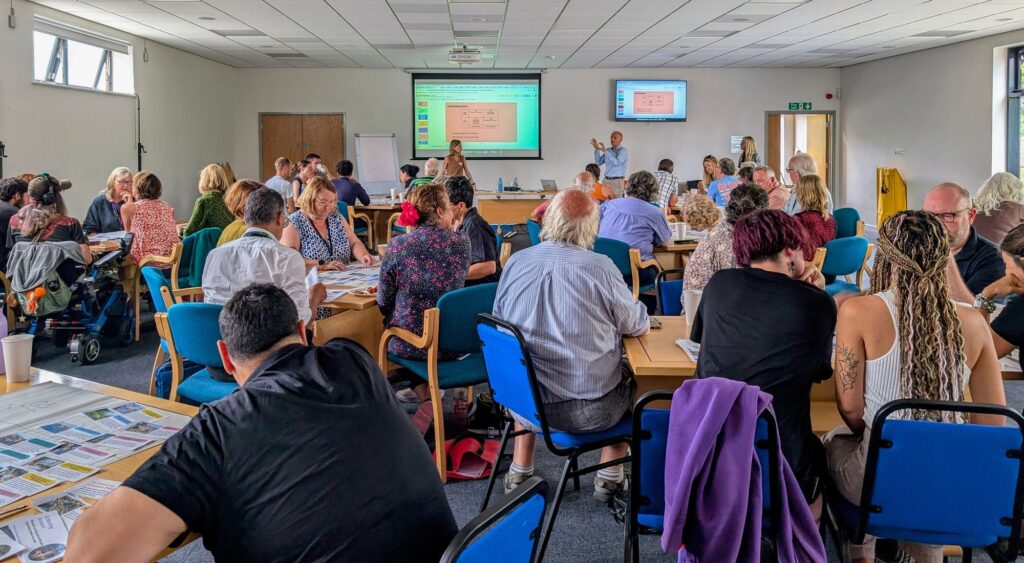
We trained a range of resident community facilitators to engage in spaces where the Council may not have established trust or strong relationships. We also set up a citizen’s panel focused on underrepresented groups, and a participation lab that trained staff to share learning and improve how they involve communities in decision-making.
We have now launched the ‘Thriving Together Fund’, which invests in organisations that are best placed to support grassroots groups to grow, rather than funding the groups directly. Building on the success of our original ‘Kitchen Table’ programme (see below), we are now funding five new programmes, each focused on different areas and underrepresented groups, to help local projects expand and strengthen in their communities.
The fund is part of a broader approach to scaling impact and strategic investment in local organisations with high potential. Whilst supporting 20 local leaders was valuable, we needed a way to extend learning and growth across the Borough. The Fund aligns with our new corporate strategy and participation lab, which trains staff to embed this work into everyday interactions, beyond high-profile projects.
The main lessons learned are that single programmes in isolation are not enough. Sustained impact requires strategic alignment, investment in convening and connections, and support for organisations that can nurture local groups. By leveraging the unique skills and creativity of these organisations, we are able to foster community cohesion, develop leadership and create opportunities for residents to thrive.
Kitchen Table
Community cohesion can sometimes feel abstract or like just a policy goal, but our ‘Kitchen Table’ programme aims to make it tangible at a local level. Working closely with Funding People as our delivery partner we focused on underrepresented groups using a mix of outreach methods, including face-to-face engagement and social media, to reach residents and groups that don’t typically receive support. The programme was intentionally open and flexible, ensuring we didn’t just attract groups that already had access to funding. As a result, half of the participants in the leadership programme were carers, a third came from minoritised communities, and one in six were disabled.
‘Kitchen Table’ is another of our engagement programmes, so called as kitchen tables are the places where people come together and share ideas as well as where people share worries and build relationships.
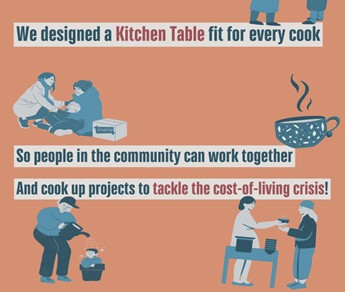
Three things we did as part of the Kitchen Table programme:
A community fund – that invested in everyday acts where small groups and charities could apply.
A leadership programme – teaching people how to learn new skills such as how to use digital and AI.
A campaign – to attract people with lived experience to build cohesion.
The programme wasn’t just about funding existing projects—it was about supporting those who often feel invisible or unsupported. Through coaching, facilitation and peer-to-peer learning the 20 groups who accessed funds were able to develop both individual and collective leadership skills. These included technical skills like fundraising and accounting, as well as facilitation, mediation, and community campaigning. This approach ensured that groups could grow sustainably, reducing dependency on funding while enabling them to engage broader communities.
Practical support extended beyond leadership skills. We helped groups articulate their work to access funding effectively, supported project delivery, and encouraged cross-collaboration between groups. This created a strong community of mutual support, with residents volunteering across projects and sharing feedback.
Projects ranged from small-scale initiatives like drop-ins around food (an inclusive entry point for different communities) to larger developments such as a new farm and wetland. This mix of scales allowed groups to learn from each other, build solidarity, and see cohesion in action. The programme also generated practical resources that continue to benefit residents and provides lessons to shape future support.
The difference community led actions have made
Reach – Independent evaluation showed that community-led action significantly expanded reach. One participant described the programme as transformational, as they were able to connect with hundreds of people in their neighbourhood rather than the dozens they would typically reach. This increased reach was driven not just by funding, but by the strong, trusted relationships that local groups already have within their communities.
Measuring impact – The programme responded to urgent cost of living pressures, where the need to act quickly was clear. While metrics such as numbers of people reached or money saved are important, they don’t fully capture the difference made. The more meaningful impact lies in supporting longer-term change and building community resilience, which is harder to measure but critical to sustaining progress.
Sustainable impact – A key learning has been the importance of supporting organisations to grow in a sustainable and manageable way. While immediate results matter, enabling local groups to build capacity without becoming overwhelmed ensures they can continue delivering impact over time, strengthening the overall resilience of the community.
Feeding the impact of this work back to colleagues in the council
We fed the impact of the work back to colleagues by sharing learning from our evaluation and lessons learned sessions with neighbourhood teams and our proactive (cost of living) team. This helped strengthen relationships not only within the council but also with local communities and grassroots organisations.
A key insight we shared was the importance of investing in community organisations rather than delivering everything directly as a council. This shaped the development of the Thriving Together Fund, which we co-designed with local groups. We’ve since supported five organisations that bring deeper community connections, local knowledge, and trusted relationships that the council alone cannot replicate.
Colleagues also gained a clearer understanding of how this approach diversifies delivery. Each organisation is contributing in a different way—for example, focusing on equalities and diversity, using festivals as platforms for community cohesion, or taking a doorstep approach to reach communities who may not engage digitally. Overall, we emphasised that this model not only strengthens impact but also protects grassroots groups from the pace and pressures of council-led delivery, by enabling more community-led, flexible approaches.
Difference the participation lab has made to your colleagues in the council
This work has made a difference to colleagues by shifting how we support staff to build relationships with residents. Rather than delivering traditional training on engagement, we used external funding to create a shared learning space where frontline staff could come together to explore real challenges, exchange practical skills, and learn from each other’s experiences.
With support from external facilitators, staff were initially coached through this approach, but over time they built the confidence to lead sessions themselves. This meant colleagues were not just learning in theory but actively applying and sharing their expertise, for example shaping how we engage residents in developing the local plan or improving accessibility through a wayfinding project by working directly with visually impaired groups.
This approach has strengthened relationships with residents and partners because it is grounded in real, practical problem-solving. Staff are better equipped to engage meaningfully with underrepresented communities and to adapt their approaches based on lived experience and feedback.
It has also influenced how we work internally. Insights from this programme have fed into wider governance and decision-making through our mission boards, where neighbourhood leads help apply learning to high-profile projects. More broadly, it has reinforced the idea that strong external engagement starts with strong internal collaboration—encouraging a more connected, reflective culture where staff feel empowered to learn from one another and build better relationships with the communities they serve.
Important considerations & top tips for others who want to do similar work
Connect programmes to wider strategy – Standalone programmes can deliver short-term results, but their impact is harder to sustain. Link the work to broader organisational priorities (e.g. corporate strategy) so that learning is embedded and has long-term influence.
Create a clear link between engagement and action – When involving residents, make sure their input leads to tangible outcomes. For example, connect strategic conversations (like long-term priorities) with practical delivery (such as funding or local projects) so people can see real, everyday impact.
Avoid prescribing what success looks like –Allow flexibility for different groups to define success in their own way. Some of the most valuable outcomes may be unexpected—such as ongoing peer support and collaboration between organisations beyond the life of the programme.
Invest in relationships and peer networks – Supporting connections between local groups is as important as funding activities. Creating spaces for peer learning and collaboration can lead to lasting impact that continues after formal programmes end.
You don’t need funding to start – If funding isn’t available, focus on bringing people together around a shared priority where there is existing energy and interest. Facilitate collaboration by helping groups identify their needs and what they can offer each other.
Use simple, practical methods to build collaboration – Activities like “needs and offers” sessions can strengthen relationships and encourage mutual support—without requiring significant resources.
Start small and grow – Pilot the approach in one neighbourhood or with a small group. Demonstrating success on a smaller scale can build momentum and encourage others to get involved.
Show, don’t just tell – Sharing real examples and stories of impact is more powerful than describing intentions. Let communities and participants speak about their experiences to inspire wider interest and replication.
Focus on building a compelling story of change – Capture and share what worked, why it mattered, and the difference it made. This helps build buy-in and encourages others—both internally and externally—to adopt similar approaches.
Photo Credit: Images supplied by Adur and Worthing Councils
 Join our mailing list