Toolset one: permission to learn
Camden family hubs pregnancy grant pilot: missions delivery in action
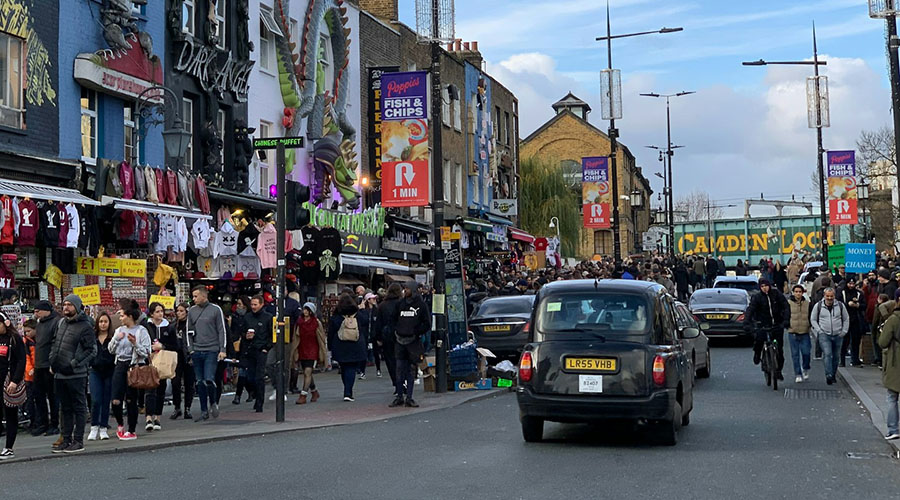
Camden is showing how bold missions can unlock creativity within existing organisational processes and structures. One of Camden’s mission’s states, “By 2030, Camden’s estates and their neighbourhoods [will be] healthy, sustainable and unlock creativity”. The mission is focusing and driving action across the council through a range of initiatives.
Through the Family Hubs Pregnancy Grant pilot programme, developed and delivered in partnership with North West London NHS Foundation Trust (CNWL) and Nesta, Camden is leading a new and innovative delivery model with tangible benefits for residents. This programme is a long-term approach to tackling the cost-of-living crisis using the operational delivery tools at the borough’s disposal.
The programme provided a means-tested unconditional £500 cash grant to pregnant people in Camden. By matching data sets from the council and the NHS for the first time, the programme was able to identify pregnant people experiencing financial hardship. Recipients were automatically informed of eligibility after their 20-week ultrasound appointments, instead of having to contact the council. The cash transfer was paired with an invitation for additional support, through Camden’s Family Hubs. By intervening during pregnancy, before a crisis occurs, the programme disrupts traditional dynamics and assumptions about the role of the council and the relationship between residents and their local government.
The programme’s success highlights several key lessons:
- Missions are an invitation to rethink existing tools and processes.
Camden was committed to determining the optimal funding distribution methods and leveraging existing levers and funds like the Household Support Fund. They were able to rethink the traditional reactive and bureaucratic process of supporting residents in acute financial hardship to instead proactively provide support.
- Across organisations, missions are a way to build and strengthen partnerships.
Camden worked with Nesta, who have a mutually reinforcing mission about closing the school readiness gap. The clarity of vision of both organisations ensured that their partnership would be focused and impactful.
In addition to the innovations in the programme design and delivery, Camden also intentionally embraced mission-led ways of working.
In practice, this included using stage gates over nine months as a project management framework. These go/ no go moments were helpful in supporting a culture of tolerating risk and acknowledging that not every project is viable and worthwhile. It was also a way of time-binding the risk and demonstrating that additional governance layers were not necessary. This allowed leadership to trust teams to navigate the uncertainty inherent in innovation.
It also meant supporting and nurturing an agile mindset on the team. An officer reflected that “lots of council staff, they just haven’t worked in an agile way enough to be confident when the plan changes”.
“They think it’s hard because we’re doing it badly. It’s just hard because it’s hard, not hard because it’s bad.”
Missions, by their very nature, are about addressing challenges that are too big and too complex for any one organisation to solve on their own. This pilot initiative is currently being evaluated, and Camden is working with Nesta to share the findings and to support others to implement similar programmes. It is vitally important that Camden was able to seize the space, resources and team capacity to capture learnings and begin to build an evidence base from the pilot programme. This ensures that the work will catalyse action beyond the borough and serves as a springboard for other innovations focused on more equitable futures.
Mission-led, learning-driven: Ealing’s generative transformation
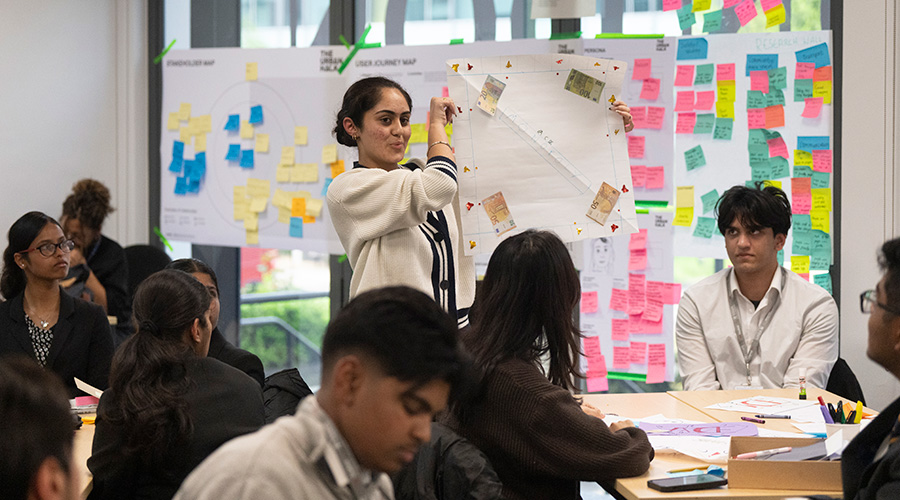
Ealing Council is developing a generative transformation approach, testing out how missions and more experimental, learning-centred ways of working can tackle challenges that are important to people and communities in the Borough.
At Ealing Council, the political leadership and senior leadership team have been exploring how the Council can work differently to tackle the big challenges which are important to people and communities.
In response to this, the teams have been developing new ways of workingwhich draw on approaches including Human Learning Systems, Agile and service design. At its core this is about collaborative problem solving through the lens of a deep understanding of a place and the experiences of people living in it.
A missions framing has been helpful for encouraging creativity and reimagining different ways of working and solutions. This framing helps identify specific challenges – building on data, community stories and energy for action to give shape and definition to the problem. A clear goal helps to frame “the innovation space”, giving people confidence and the “mandate” to be bold in experimenting.
The strategy and change team have been developing an approach to working with colleagues in the Council, communities and partners to respond to a mission. They have deliberately started small through a number of service designs to test both the way of working and its potential impact on addressing local challenges.
They are testing missions framing as a way of joining up resources, effort and creative problem solving around a singular focus. Working in sprints focused on a particular mission, a team with a range of disciplines, including researchers, data analysts, service designers and subject matter experts, can work together – aligned and with increased autonomy.
Building the right teams has involved a strong focus on values not just technical skills – open mindedness, collaboration, a feeling of urgency and the need to try new ways of working, and a balance between reflection and action are all valuable.
A really important part of the approach is the way teams are working with communities. Community members become part of the team, they participate in team activities including research, sensemaking, synthesis and design activities. Regular check-in sessions help the team reflect on how the work is feeling for everyone and whether the language, framing and activities in the work feel accessible to participating community members and the wider team.
A recent example of this approach in action focused on improving youth civic engagement. The Council team worked with schools and young people in the Borough to first do some deep research and synthesis. The group explored new ways to build civic engagement. They developed a programme called the Urban Hack – young people in sixth forms get four days of training across research, problem-solving, ideation and business development. They are then given a real challenge to solve and linked up to potential funding opportunities to support the development of their solutions. This has supported more civic engagement while helping the young people involved to gain valuable skills and work experience.
The strategy and change team are taking an intentional approach to ensuring learning from their work is shared across the Council. There is a strong focus on knowledge sharing and on amplifying the work that is happening to the rest of the organisation. The model also means people in the Council involved in the work have the opportunity to develop the skills and mindset needed for this way of working.
The governance wrapped around this approach is focused on building confidence around the ways of working and trust in the teams. A transformation board, supported by a transformation methodology and design group are in place to support teams and projects to build their approach, narrative, impact and reporting. As much as possible teams are given agency to stop things when they are not working and try a new approach instead.
Ealing’s approach shows some of the value of using missions to create space for innovation. The model also shows the potential of starting small and focused as a route to building confidence, capabilities and behaviours to support these new ways of working.
Toolset two: collective courage
How Bristol One City is using missions to broaden its coalition and narrow its focus to maximise impact across the city
First launched in 2019, the Bristol One City Plan sets out a vision for Bristol in 2050 that is a “fair and sustainable city, a city of hope and aspiration, where everyone can share in its success”.
Early versions of the Plan were expansive in scope with wide ranging ambitions for the city. With seven thematic boards in place to oversee delivery, the approach was successful in bringing together and galvanising a wide range of partners from the public, voluntary and third sector, all with a strong sense of passion and commitment to the work. This was not, however, without challenges, particularly in terms of evidencing tangible outcomes and impact with 528 goals emerging over time. The approach risked trying to tackle ‘everything, everywhere, all at once’.
Over the past year, the approach in Bristol has evolved, shifting from a broad, expansive framework, to a mission-led approach designed to focus collective effort while increasing ownership and participation across the city. This work has been stewarded by the team at Bristol City Office, a team that works with partners across the city to drive meaningful change through collaboration.
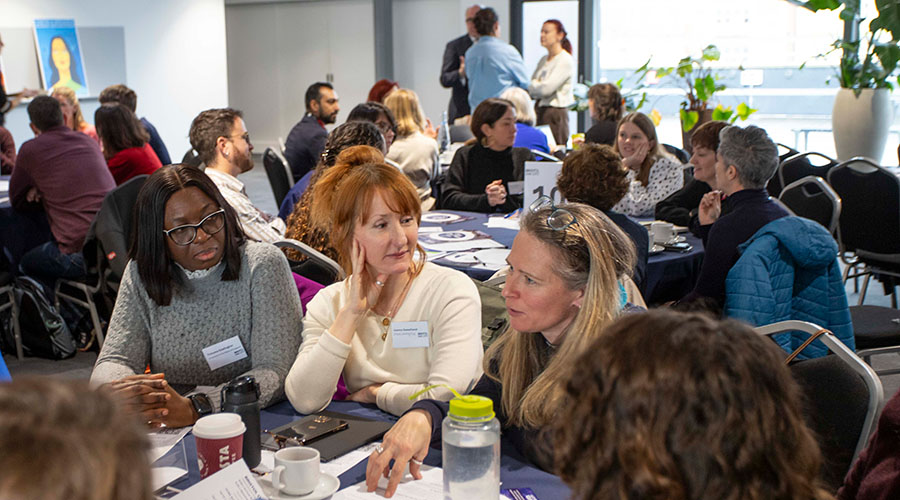
The mission-setting process adopted was wide ranging in its reach. The team at Bristol City Office conducted stakeholder workshops, held city-wide gatherings, delivered citizen engagement, and held collective sensemaking sessions involving a cross section of partners. Through engagement with around 200 partner organisations, the team developed six criteria, or shared principles, to help define what makes an effective One City priority – equity, added value, involvement, impact, acting early and strengths-based. These principles became the lens through which the four missions, which now sit as part of the plan, were identified.
Taking this participatory approach helped maintain and grow the broad coalition of partners which has always sat at the heart of One City, a group of stakeholders who all feel they have something to contribute.
The shift to missions has positioned One City as a social movement for Bristol as a whole, signalling an ambition to broaden participation even further. Within the plan, different groups across the city, including citizens, neighbourhoods, businesses and service providers, are invited to consider how they could come together to deliver each mission, building a sense of collective action and ownership.
The missions approach in Bristol is an evolution rather than wholesale reworking of what has gone before. The seven boards remain but they are now tasked with considering how they can contribute across the missions through their thematic lens. The engagement process, which was so central to the development of the approach, is not being seen as a one off. Biannual city gatherings continue to be held plus a regular programme of webinars and workshops designed to ensure those who want to contribute have the opportunity to do so.
Overall, partners and stakeholders in Bristol have welcomed the mission-led approach. The launch of the new plan has delivered a renewed and reinvigorated “sense of positivity and potential” about what can be collectively achieved for the city through a broad coalition with a shared, and more clearly defined focus on impact.
Toolset three: system mobilisation
Delivering London’s housing mission: a sprint approach to mission governance
In December 2024, the London Partnership Board set out a bold housing mission “to meet London’s housing need by rapidly accelerating the delivery of new homes”. Sitting alongside five other London-wide missions focused on growth, health, opportunity, safety, and energy, it is part of a shared framework for tackling the city’s complex challenges. The early success of the housing mission showcases how mission working is already having a tangible impact in London.
The mission is led by a board, co-chaired by the Deputy Mayor for Housing and Residential Development and the Leader of the London Borough of Waltham Forest, Deputy Chair of London Councils, and Executive Member for Housing and Regeneration. The board brings together senior leaders from across the housing system, including central and local government, developers, and housing associations, and supported by a dedicated mission team made up of officers from London Councils and the Greater London Authority (GLA), working as a single integrated unit.
To deliver the mission, the board and team adopted a sprint approach, working in a fixed period towards a shared aim. Each sprint tackles a clearly defined aspect of the housing delivery challenge, generates practical outputs and passes them to the appropriate part of the system for implementation. Sprints are driven by a Delivery Group, made up of experienced practitioners from across local government, central government and the private sector. Members commit to leveraging both their professional expertise and their organisational resources, networks and convening power.
The first sprint focused on developing a shared definition of stalled sites, and building the evidence base to understand rapid delivery opportunities able to accelerate housing delivery by summer 2029. The sprint started from the data. Working with Savills, a member of the Delivery Group, they developed a modelled pipeline of schemes in London and examined the characteristics of sites which are not progressing or stalled. This included producing a modelled list of schemes for rapid delivery, showing the scale of opportunity, which the group agreed should be further developed through an open call for sites. This evidence base provided a shared understanding of the challenge and a clear way to ground the discussions in specific opportunities. Different views were encouraged and difficult or uncomfortable conversations were enabled by an overarching shared purpose.
The sprint concluded with taking the findings to the mission board which was keen to translate the work into action. The board agreed to a second sprint focused on working up a toolkit of interventions to unlock rapid delivery sites, which alongside a call for sites, could be operationalised by a newly established New Homes Accelerator London team, providing a clear route to impact.
Reflecting on the first sprint, the mission team emphasised the urgency and energy that characterised everything from board meetings to team check ins. As one officer put it, there was a shared determination that the mission should not be a talking shop.
“Everyone knows we need to do something, so let’s get going, try things and see what works”.
The sprint model created permission for a “test and learn” environment, prioritising pace and learning over perfection, hierarchy and rigid processes. A team member noted that because of this approach they were able to accomplish “what would have taken months or years, rather than the days we’re working with”.
Critical to sustaining this momentum was a seamless cross-organisational mission team. By attending early to the logistics of partnership working, such as shared digital spaces, weekly meetings, and clear sign-off processes, the mission team positioned themselves as accelerators and enablers of the mission rather than another layer of governance.
By framing the delivery of the mission as a series of sprints and explicitly recognising that solutions will sit across organisational boundaries, the housing mission created a space where collective action becomes both possible and expected.
Mission Waltham Forest is driving new ways of working together to tackle the borough’s biggest challenges
For Waltham Forest Council, missions provide a way to unite council teams, partners and communities around the shared priorities that matter most.
Mission Waltham Forest outlines the council’s vision for a more equal borough. It sets out six borough missions shaped by residents’ priorities, alongside four council missions focused on transforming how the council works to achieve its vision.
Just as important as what the missions aim to achieve is how the council works differently with partners and communities towards them. Mission-based working has offered a practical framework to focus on shared goals, involve the right people, and build a culture of learning. This has been essential in a context of increasingly constrained resources, ensuring effort and investment are targeted where they will have the most impact.
A core principle of Mission Waltham Forest is tackling inequality by centring lived experience in design and delivery. Knife crime was identified early on as a priority for mission-based working due to its complexity and disproportionality – challenges no single organisation can solve alone. Through this mission, the council and partners have deepened their collaboration with communities, especially young people. Young residents now play a leading role in shaping local responses that build confidence, resilience and feelings of safety.
This approach has already generated innovative, co‑designed projects, including a Safer Routes pilot placing youth workers on routes around schools, and an Inclusive Mentoring programme enabling young people to mentor police officers.
Inside the council, missions have become a form of organising principle. They resonate strongly with staff by helping them see their contribution to borough‑wide outcomes. This cultural shift has been reinforced through internal communications, staff engagement and leadership development, supported by a new corporate impact framework aligned to the missions.
In the constrained financial context facing local government, there is important learning from this work that will shape how the council delivers transformation that is rooted in the ambition of Mission Waltham Forest. Crucially, this is about embedding this approach in how change is delivered rather than selectively adopting it to specific issues.
So far, Mission Waltham Forest has meant embracing an approach which brings together purpose, community insight and cross-system collaboration. It has created space for new ways of working with residents, positioning them as active participants in understanding challenges and shaping solutions. Further detail on the council’s delivery towards Mission Waltham Forest can be found here.
Toolset four: community power
Gateshead Council is using missions to refresh its economic development strategy with a distinct story rooted in the social and economic change people and communities want to see for the borough

Gateshead Council is using a missions framework to underpin its refreshed economic development strategy. A commissioned local economic assessment gave a clear account of Gateshead’s economy and its challenges, including flat productivity since 2018, an ageing population, and high reliance on lower skilled roles. The government’s Plan for Change, the Modern Industrial Strategy, and the North East Combined Authority’s local growth plan also gave clear national and regional context to align a refreshed strategy. What a missions-based approach provides is a framework to ensure the strategy is rooted in the context of Gateshead.
Missions provide a framework to develop a distinctly Gateshead story about economic development. An emphasis on experimentation and learning helps bridge the very real need to demonstrate short- and medium-term impact while focusing on long-term change. This focus on experimentation in the context of Gateshead could mean exploring what works for improving economic and social outcomes for young people and older people, as well as understanding what works in rural parts of the borough and in urban parts.
A missions framework also helps navigate the interwoven nature of economic and social challenges. This is about rooting economic development in real tangible change that communities can see and feel. In Gateshead, this will practically involve drawing on the energy, momentum and learning from existing work including community wealth building approaches and Changing Futures Northumbria – a programme focused on improving outcomes for adults experiencing multiple disadvantage. It will also involve inviting and enabling people, communities and organisations to participate in the missions, and a focus on building the social infrastructure, social capital and capabilities across the borough that are needed to help build better social and economic outcomes.
Over the autumn and winter of 2025, the council took the next step in shaping its economic development strategy. They held a series of co-creation sessions with people across Gateshead to help develop the missions which will sit at the heart of the strategy. These sessions involved a wide range of people and organisations including residents, young people, schools, colleges and universities, the VCSE sector and businesses. These sessions asked people to imagine Gateshead in 2035 and what they wanted it to look and feel like. As well as exploring challenges, these sessions also focused on what’s strong in the borough that people want to build on.
Gateshead Council’s approach to refreshing its economic development strategy is demonstrating the potential of missions to support policy and strategy to feel tangible and rooted in the context of a place. The missions framework is also helping to weave together social and economic challenges and provide an invitation for people and organisations across Gateshead to participate and experiment in solving these challenges.
How Wigan Council is using missions to build more relational public services and to deepen the way it works with communities and partners to tackle long-term local challenges
In Wigan, the council is exploring how a mission-led approach can support a shift from transactional public service delivery to a people-centred model for long-term change.
This work builds on learning from a decade of renewal through the Wigan Deal. The Deal was successful in many ways, but more work is needed to meet the current and future needs of the Borough – particularly in terms of addressing worsening inequalities, the impact of the pandemic, and broader structural challenges facing residents.
An evolution in approach was needed. One grounded in community voice, shared purpose and long-term commitment. This led to the development of a genuine partnership movement of change: Progress with Unity, a plan centred on two key missions:
- Create fair opportunities for all children, families, residents and businesses
- Make all our towns and neighbourhoods flourish for those who live and work in them
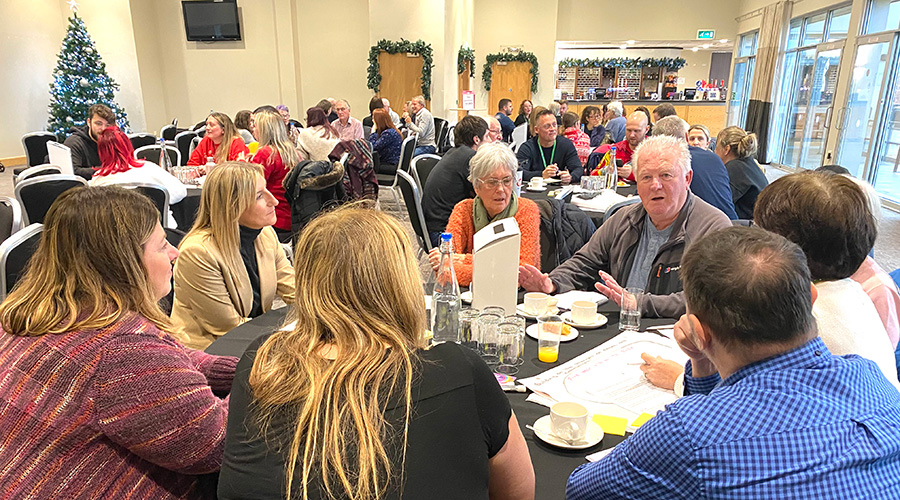
At the heart of the mission-led approach in Wigan is the belief that change must be co-designed with residents, not done to them. Working with Collaborate, Wigan set up a Community Connection Group, bringing together residents alongside voluntary sector partners and council leaders. This group offered space for honest conversations built on a recognition that communities understand their needs better than the council. Wigan’s leaders made a choice through this group to listen deeply, even when things got uncomfortable, leading to increased trust and improving relationships.
The development of Progress with Unity was an 18-month process during which the council and its partners co-developed and tested six ways of working to achieve long-term change – see the person, listen deeply, know the place, do the right thing, connect to neighbourhoods, and show love and pride. Rather than replacing existing organisational values, these ways of working created shared expectations across the system, spanning the council, NHS, college, VCFSE sector, businesses and beyond.
The approach to missions in Wigan has also focused on developing new models of leadership. Leaders have a focus on collaboration and empowering staff to innovate. They model vulnerability, being open when they don’t know the answers. For leaders in Wigan, it’s about going where the energy is rather than sticking to silos or working within traditional structural boundaries.
Wigan’s mission-led approach is a cultural and relational shift. By rebuilding trust, developing and embedding shared ways of working, and enabling staff and partners to innovate, the council is laying the foundations for long lasting change shaped by local people and communities.
Toolset five: impact in uncertainty
East Midlands Combined County Authority: setting missions in a new mayoral strategic authority to drive inclusive growth

Established in 2024, The East Midlands Combined County Authority (EMCCA) faced the dual challenge of setting a clear direction for long-term inclusive growth in a geography that had never operated as a single regional entity before. In response, EMCCA adopted a mission-led approach to focus action across the region, mobilise partners, and to frame inclusive growth as a shared place-based endeavour rather than a narrow economic exercise.
Under the leadership of Mayor Claire Ward, EMCCA developed an Inclusive Growth Framework, setting out a core mission for the region and six supporting ambitions.
“By 2040, every resident will be proud to call the East Midlands home. All young people will have a fair start and a clear path to progress. A thriving, green and inclusive economy will improve health and wellbeing, widen opportunity regardless of postcode, and empower all residents to shape their places and future.”
For EMCCA, a missions approach created permission to start with outcomes and work backwards to the levers, partnerships and strategies required to deliver them. Missions provided a way to sequence and integrate new and existing strategies into a single outcomes-led framework, rather than parallel documents competing for attention and capacity. By developing missions alongside the East Midlands Growth Plan, EMCCA was able to bridge statutory requirements and longer-term ambition. This created space to redefine growth beyond purely economic metrics, embedding social and environmental outcomes into the region’s core strategy. The Growth Plan became a vehicle not just for compliance, but for articulating a broader vision of what a thriving region could look like.
The mission and ambitions served as practical scaffolds for setting up their PMO and decision-making structures. Rather than treating governance, processes, capability and data as generic corporate set up tasks, EMCCA designed its foundations around requirements of mission-delivery: cross-sector coordination, data to track outcomes, prioritisation mechanisms, and a transparent line of sight from outcomes to programmes.
Senior leaders understood the core purpose of the Mayoral Strategic Authority (MSA) as tackling challenges that transcend organisational and administrative boundaries. As a strategic authority increasingly obtaining more direct delivery levers through its devolution journey, EMCCA prioritised system working and relationship-building with local authorities, anchor institutions, businesses and communities. Missions provided a shared language and way for partners to see the value of the working in new ways and working with EMCCA.
A key learning from the work so far, is that EMCCA’s approach required political bravery. EMCCA explicitly named priorities that sit beyond the MSA’s direct control, and beyond a single mayoral term. The Inclusive Growth Framework clearly distinguishes where EMCCA can have direct impact and where progress depends on working with partners.
One officer noted that missions “buy permission to stay the course,” linking near-term actions to long-term transformation. While the impacts of major regeneration initiatives, such as development in the Trent Arc, may not immediately register in headline indicators like healthy life expectancy, intermediate outcomes like air quality can provide credible evidence of progress towards the missions.
Setting and sharing missions also enabled EMCCA to tell a story of a place that had never been brought together into a single governmental geography before. Walking down a high street in the region, people can observe how challenges like growth, housing, and opportunity are all visibly manifest in empty shopfront. As one official said: “Place doesn’t lie…place simplifies things and gives you a way to decode it.” Missions became a way of “decoding” the opportunity present in a diverse region and telling a story that linked economic, social and environmental aspirations.
EMCCA’s experience demonstrates how missions can provide clarity, coherence and legitimacy for new MSAs. When grounded in place, aligned with statutory levers, and backed by political leadership, missions can act as a powerful tool for convening regional systems, building trust and driving inclusive growth.
How Stockton-on-Tees Borough Council is using missions to shape its organisational ways of working to deepen its impact for the borough and its communities
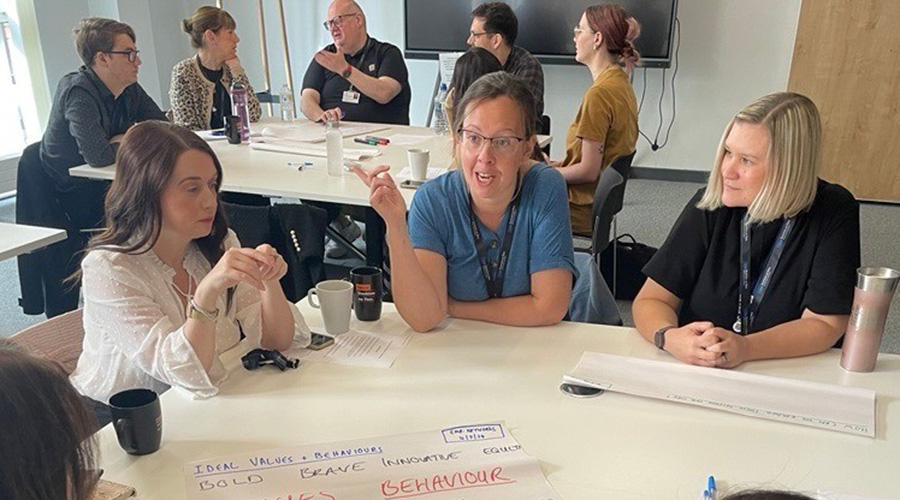
Powering our Future is a new approach guiding Stockton-on-Tees Borough Council’s organisational transformation with missions at its heart. For the council, missions have become a way to shape how it works, learns, and collaborates with others, reshaping its internal culture and its relationship with partners and communities.
The decision to adopt missions came through the council’s strategic planning cycle. While Stockton-on-Tees is a high performing council, senior leaders recognised new ways of working would be needed to meet emerging and future demands such as funding pressures and the increasing complexity of challenges facing people and communities.
The council developed five missions – focused on communities, placemaking, transformation, partnerships, and colleagues – all connected to an overarching vision for the borough. These missions were designed to cut across services, acknowledging the fact that complex social challenges don’t sit neatly within organisational boundaries or service silos. The missions provide a clear set of ambitious shared goals, enabled by learning, flexibility and cross-organisational working.
One of the early learnings from embedding missions and mission-led ways of working in the council has been the importance of bringing staff along on the journey. While direction was set at Cabinet and senior leadership level, it was crucial to work with teams across the council to think through what the missions meant in their context.
Design principles served as guardrails and helped staff think about missions in the context of their day-to-day work. These principles include putting communities at the heart, embracing digital innovation, and being data-led.
Two practical examples of how missions are reshaping ways of working in Stockton-on-Tees are a Community of Practice and an Ideas Lab. The Community of Practice offers a space for staff, below director level, to come together to engage in peer-learning and collective problem-solving. Over time, attendance has grown significantly, with staff joining sessions because it offers them a way to collectively navigate change in practical and accessible ways.
The Ideas Lab invites all levels of staff to propose bold and creative ideas across any areas of the council. It offers support to people bringing forward ideas to help turn them into workable business cases, recognising that the creativity and the ability needed to turn ideas into something tangible sit in many places and come in many forms. The Ideas Lab also offers constructive feedback when proposals aren’t possible, building a sense of shared ownership and an understanding of why and how decisions are made. For Stockton-on-Tees Borough Council, missions have become a way to reshape organisational culture and behaviours, strengthen partnerships, and enable staff to bring creativity and innovation to their work. They are helping the council work in ways that deepen its impact for communities through recognising complexity, embracing learning and bringing together staff at all levels to get behind shared, long-term ambitions.