What Greater Manchester teaches us about public service reform

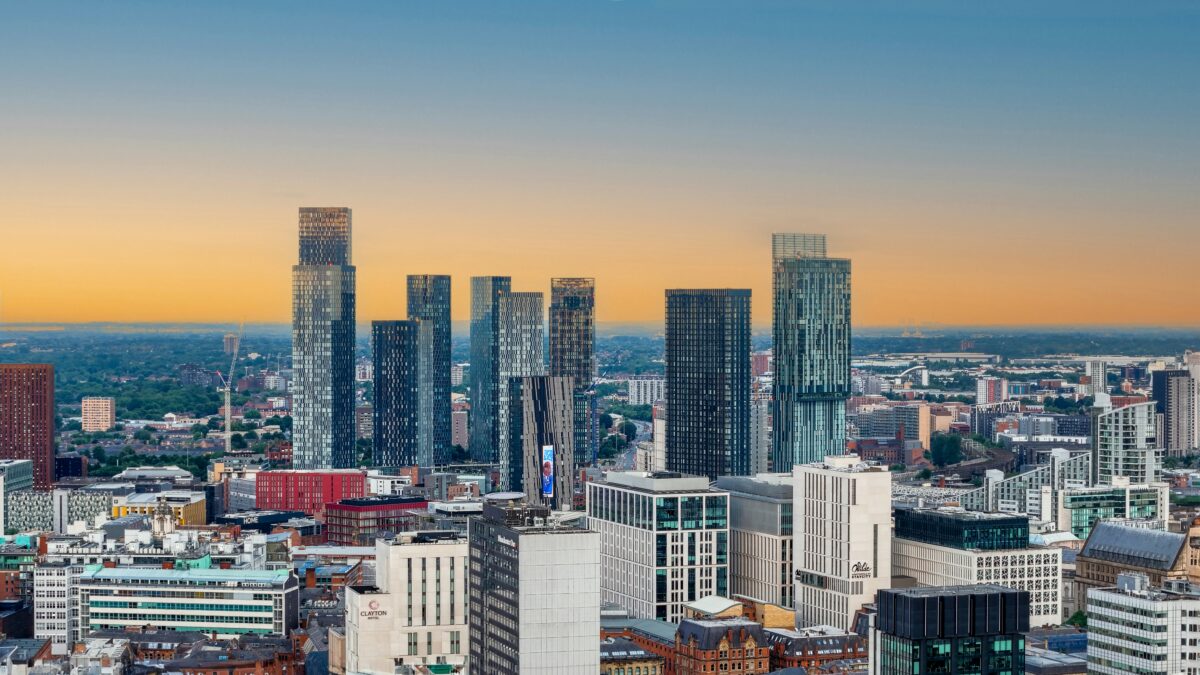
This article was first published in The New Statesman on 20 July 2026.
The best-known achievements of Burnham’s Manchester are economic. Its most enduring legacy may end up being institutional.
Almost overnight, Greater Manchester has become a blueprint for government. Feverishly, the pundits and politicos have been pouring over Andy Burnham’s devolution success story, dissecting what has been achieved and what might be replicated elsewhere.
Perhaps understandably, much of the focus has been on how the city region has bucked trends to become the fastest growing regional economy outside London and the role that Burnham and the Combined Authority have played in getting there.
But there is another story waiting in the shadows of the housing-led regeneration and knowledge clusters which have characterised this growth. It is the tale of how public services have shifted in Greater Manchester and, most notably, how communities have been invited into their design and delivery. It is this story which can help us understand more about the potential future shape of the state under Andy Burnham, and the public sector reform agenda his government will pursue.
Established to drive economic growth through powers such as transport, skills and strategic planning, mayoral combined authorities (MCAs) now find themselves playing an important collaborative role in supporting the reform of public services in place.
The story of Greater Manchester is therefore not just one of devolution and economic growth. Arguably more significant has been its pioneering approach to public service reform. Building on principles that pre-date the creation of the MCA – and drawing heavily on the leading-edge work of local authorities such as Wigan Council – Greater Manchester has developed an approach that has become highly influential.
At its heart are a set of principles that have become increasingly accepted as the foundations of effective local public services: organising around people and places rather than institutions; investing in prevention rather than intervention; fostering collaboration across organisational boundaries; and, critically, working alongside communities and the VCSE sector in ways that strengthen social fabric and empower local people.
These principles have shaped thinking about public service reform far beyond Greater Manchester and are now reflected in the government’s own public service reform principles. They are also increasingly applied across a widening range of policy and public service areas by well-established MCAs.
There are a few reasons for this. First, the political priorities of elected mayors often range beyond growth. Kim McGuinness is seeking to address child poverty in the North East; in West Yorkshire, Tracy Brabin wants to increase social inclusion and reduce violence against women and girls; Burnham made tackling homelessness an early cornerstone of his political position in Greater Manchester.
Second, the widening technical scope of MCAs – including the addition of former police and crime commissioner functions and a growing influence over NHS commissioning and delivery, especially in Greater Manchester and more recently in South Yorkshire – gives them the opportunity to shape, and therefore reform, public services in ways that were simply not possible before.
However, the third reason is arguably the most important: that it is impossible to achieve the “good growth” that Andy Burnham has set out his stall for without reforming public services and investing in strong communities.
For the impact of growth to reach “every postcode”, we require services that support the fundamental social conditions needed to ensure that every community is able to benefit from the jobs and wealth it creates. Good growth and well-functioning public services, therefore, are two sides of the same coin, and public money must be invested in ways that achieve both aims: building stronger, fairer, local economies and providing services and support for communities to feel their benefit.
In Greater Manchester this thinking has been brought together under the banner of the Live Well programme, which aims to ensure access to “great everyday support in every neighbourhood”. Live Well is based on a simple but significant belief: that public policy priorities such as employment, good health and wellbeing depend at least as much on strong communities, social networks and social infrastructure as they do on formal services. This is about designing services with communities to ensure that those services meet them where they are in their lives and build a connected system of relational support around them.
Hence the original economic growth objectives of MCAs have become about social policy too – about people’s experience in their neighbourhoods, their relationships in their community and how they are supported and empowered by different partners and services to lead good, independent lives.
That opportunity is now being seized by places across the country. Through New Local’s recently established network of public service reform leads from MCAs across England, we are seeing leaders exploring many of the same opportunities and growing their capabilities to support change. While the policy priorities differ from place to place, there is a growing consensus that these are the tenets of public service reform today.
Andy Burnham has previously described Live Well as part of a broader effort to “rewire public services”. As he becomes Prime Minister, it could come to represent an organising philosophy for how government should work and what it should focus on today.
As the new Prime Minister has made clear, the days when we could operate as a highly centralised state that picks up the pieces when things go wrong are long gone. Our energies now must be focussed on building a devolved nation where regional and local leaders – with wide-reaching powers, resources and influence – collaborate to create the conditions for people and communities to thrive. Live Well, and the principles upon which it rests, will be at the heart of the blueprint.
Photo by Mylo Kaye on Unsplash.
 Join our mailing list