Making neighbourhood health neighbourhood-led
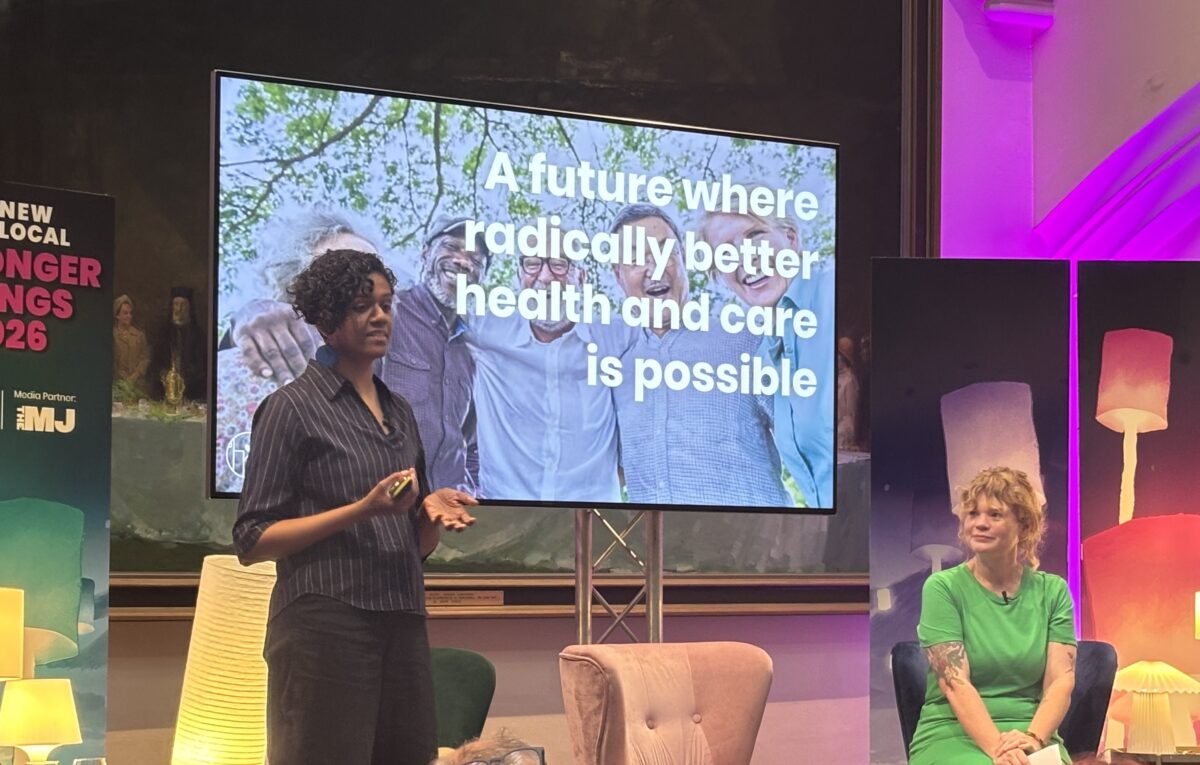
Emily Brook from Care City CIC and Elspeth Paisley from Community Resources work together in Barking and Dagenham as part of the BD Collective, a member-led co-operative CIC which recognises that we’re better together: sharing power, strengthening connections, and creating opportunities with the VCFSE and wider partners.
In this guest article, they discuss how, in Barking and Dagenham, lasting change for people has come from trusted relationships, shared power, and a relentless test-and-learn approach that lets neighbourhoods lead their own change.
It’s an ordinary weekday and Neil has just seen his physiotherapist in hospital. He’s been sofa-surfing and missed loads of appointments because letters didn’t reach him. His physio was concerned about the severity of his asthma, and his chaotic lifestyle – but…what can you do?
Neil, who experienced the situation above, is the reason Elspeth originally got involved in shaping neighbourhood working:
“Thankfully, Neil happened to have a physio who saw beyond his immediate clinical needs and recognised that he needed more than healthcare.
She introduced him to Community Resources, a local community organisation in his neighbourhood.
From there, Neil’s story became one of partnership.
People from Community Resources and his local church didn’t take over his life or try to fix it for him. Instead, they partnered with him. They encouraged him, challenged him when he needed it, celebrated small steps forward and stayed alongside him through setbacks. Neil was always the one making the choices. He decided what mattered, what he wanted his future to look like and the steps he was prepared to take. The people in his neighbourhood simply refused to give up on him.
Around those relationships, institutions also played a crucial part. Trusted colleagues in the council helped secure somewhere stable to live. Health professionals continued supporting his physical health and recovery. Different services contributed what only they could contribute. But the glue that held it all together wasn’t a referral pathway or a multidisciplinary meeting. It was people who knew Neil, cared about him and were willing to keep journeying with him.
Today, Neil has a place to live, genuine friendships, a community where he belongs and a local church where he both gives and receives. His health is better because his life is different.
Looking back, none of the organisations involved in Neil’s story could honestly claim to have transformed his life single-handedly. But because relationships held everything together, they created the conditions in which Neil made changes to his life.
Every system is perfectly designed to get the result that it does
This year many people from across the country have told us that they have faith in neighbourhood health. In a world of policy fatigue, it’s a rare bolt of genuine energy. But we’ve both worked around neighbourhood approaches for most of the last ten years, and we’d be lying if we didn’t say that we fear neighbourhood health, as envisaged in some quarters, is unlikely to touch our stubborn and widening health inequalities. After all, much of this has been national policy in England since just after the Covid-19 pandemic: integrated neighbourhood teams, organising health and care around a person, 30-50,000-person service delivery footprints, population health management, joint working across public and VCFSE sector place partners.
Since then, many places have prioritised service-side integration and top-down, professionalised approaches. Across the country, neighbourhood working has repeatedly become stuck in three places: reshaping healthcare without involving communities; waiting for perfect data and governance before acting; and designing models around organisational boundaries rather than people’s lives.
‘Consistency is contrary to nature, contrary to life.’ – Aldous Huxley
Most places are also telling us that designing neighbourhood health with their residents and community sector feels hard. That something that Neil sees as life changing might look like chaos from the top.
That’s not a flaw to be buried or ignored. Every organised response to complexity looks dispersed and variable from the top of a place system. Neighbourhood health needs rigour and structure just as much as any system does, but a different kind of rigour and structure, designed for making a multitude of improvements and prototyping reimagined approaches where the status quo has failed. A method that is intentionally designed to work with, rather than in spite of, the factors that affect health in our communities.
For that reason, we’re building a series of capabilities in our neighbourhoods, connected through conditions – not entirely integrated, because where one person may need a social prescriber and a VCFSE organisation to work with them seamlessly, another may need adult social care, a community hub, housing and the neighbourhood policing team. So we’re not trying to integrate all our services, we’re creating enough shared DNA in our neighbourhoods that capabilities can ‘rub along’ well together when they meet around a person.
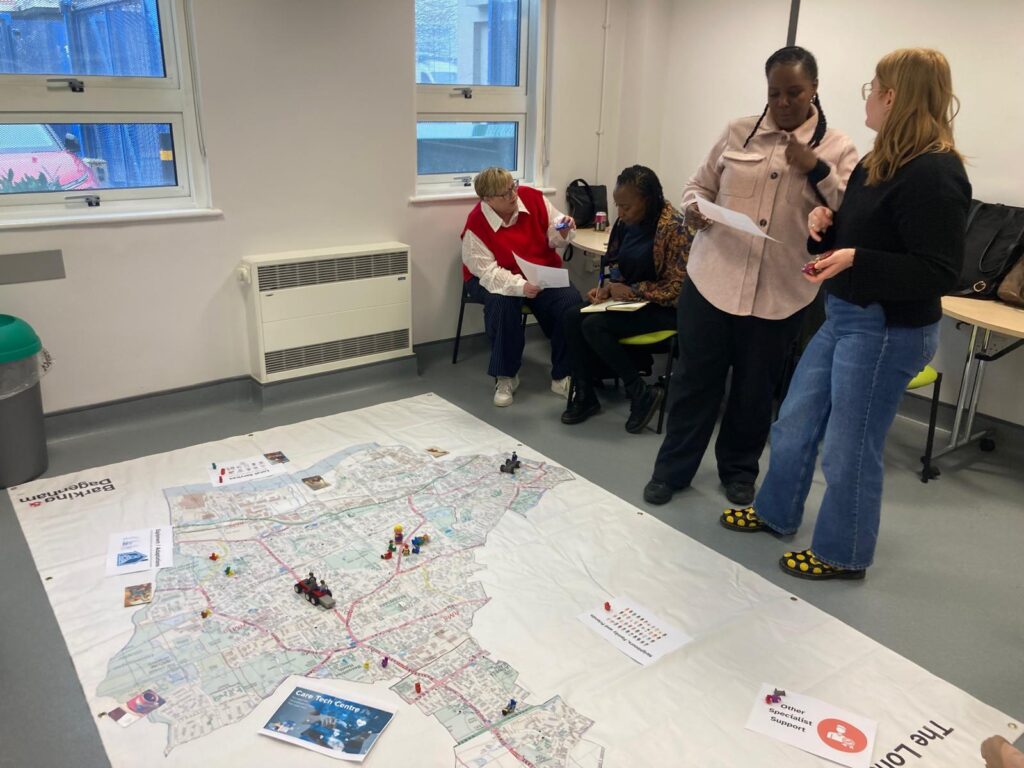
People who live and work in the neighbourhood are coming together around the shared challenges that they are most invested in solving. Our neighbourhood capabilities are specific to our people, our places, our challenges, as they should be in every place. These capabilities are a blend of emerging things (our Integrated Neighbourhood Teams and the Design, Test and Learn teams that sit below them) and our existing ‘stronger things’ (for example our Neighbourhood Networks of residents leading action, our Community Navigators, Connect Project, GP pop ups, Technology-enhanced care approach). Everything we’re growing is focused on relentless and rigorous designing, testing and learning, because there are no simple routes to creating places where people can thrive. And what services describe as prevention, we experience in our lives as thriving.
The job of a system that wants neighbourhood health to work isn’t to make neighbourhoods more like the public sector, it’s to build the conditions that make ‘messiness’ deeply productive. Conditions for enabling, not control.
The enabling conditions that we’re finding essential include:
- Relationships as a foundation: Between different sectors, services and residents, and as a central cause for what we deliver – good relationships are a crucial lever to people making a change in their life, their health, or around a shared population health challenge.
- Learning Focus: We are making changes to complex challenges, so we use robust ‘design, test and learn’ cycles to adapt along the way. By taking this approach across our neighbourhoods, we are generating and exchanging vast knowledge on what works, and what doesn’t, so we can adapt quickly.
- Creating New Power: Each capability is co-designed and co-led by the people, including residents, who have the most knowledge and experience of the neighbourhood and the challenge, and the skills to make change. After all, power is not a zero sum game.
- Purposeful funding: Getting the decision-making about money to reflect the purpose of its use, and investing in supporting small changes, test and learn cycles, and new ways of working.
- Data for curiosity: At a neighbourhood level, bringing together data from across health, local government and wider population health indicators to help us ask the right questions. Around each test identifying the best easily-measured indicators of change and using them to understand change over time together.
- Shared leadership: Across place partners, including the VCFSE sector and residents, understanding our purpose together, and focussing on creating the right conditions for radical collaboration, knowledge exchange and trust.
These conditions are the ‘shared DNA’ that tie together our neighbourhood capabilities. They ensure that they have the sound method to be ambitious about shifting the dial on health life expectancy in Barking and Dagenham’s neighbourhoods. They will evolve – we’ve been learning about them every week since we started.
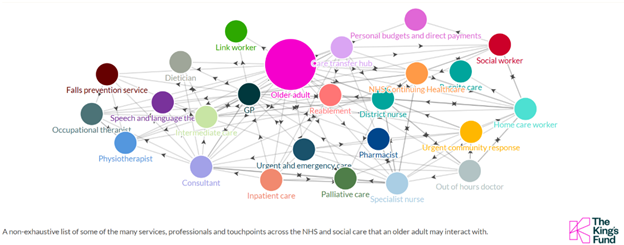
So, we’re building an approach that is strong on purpose and conditions, but where what happens is driven from the right place. An approach that can respond to challenges for many years to come, long beyond the focus of the current National Neighbourhood Health Implementation Programme. We’re not alone in landing on the importance of conditions. The King’s Fund recently looked at neighbourhood health models in Brazil and New Zealand and found the same thing we have: what made the difference wasn’t the model itself, it was whether the surrounding system created the conditions for it to take root and last. Perhaps one of our recurring challenges in England is that we often adopt the model before giving equal attention to the conditions that allowed it to succeed in the first place. When the results differ, we can end up questioning the model rather than the environment we’ve created around it.
What made the difference to Neil’s life wasn’t a neatly curated public sector operating model. It wasn’t a well-gripped delivery plan. It was working in partnership, with trust and mutual respect, over a period of time around the things that mattered the most to him.
This is what we’re creating at scale in Barking and Dagenham.
We think we’re forgetting something radically simple: each neighbourhood is both the assignment and the solution. Not a place services get delivered into, rather, a place that already holds most of what it needs.
Places to start
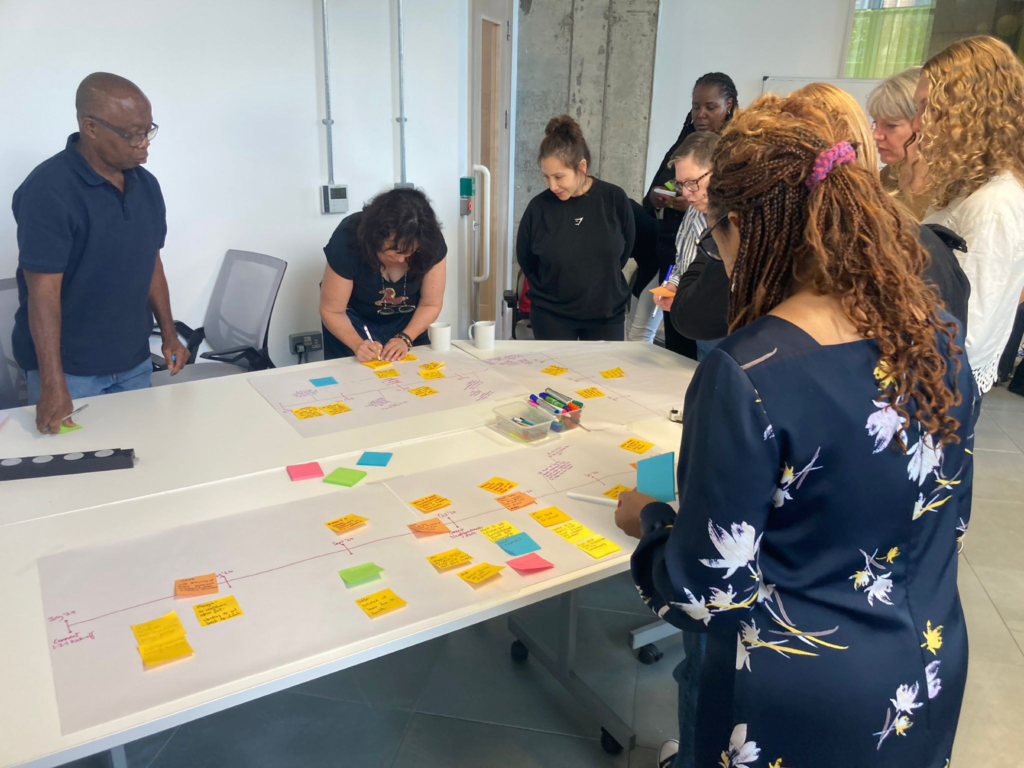
The excellent Anjali Moorthy, Service Design Lead at Care City, built a simple tool called Where does health begin, which takes a small group through three people’s lives on a paper timeline, working backwards from a health crisis. You pull the strip back through the decades, stopping to ask what was going well at each stage, what would have helped, what could have been built on. We’re sharing that here as a conversation starter to gather people around on day one. We have other practical tools that we’ve been testing and are happy to share. You can find out more about our work here.
We’ve also committed to publishing a summary next year of what we’ve learned about making neighbourhood health neighbourhood-led. We’ll share openly about our learning from our place, and we want to include your learning from yours as well. We’re going to provide some spaces for people to come together and share what they’re testing – if this matters to you, come and join us here.
 Join our mailing list