How the public sector can unleash the power of local communities
The text was originally written in Swedish by Jenny Asp and translated for New Local.
How can the public sector move from solving problems for people to unlocking their own potential?
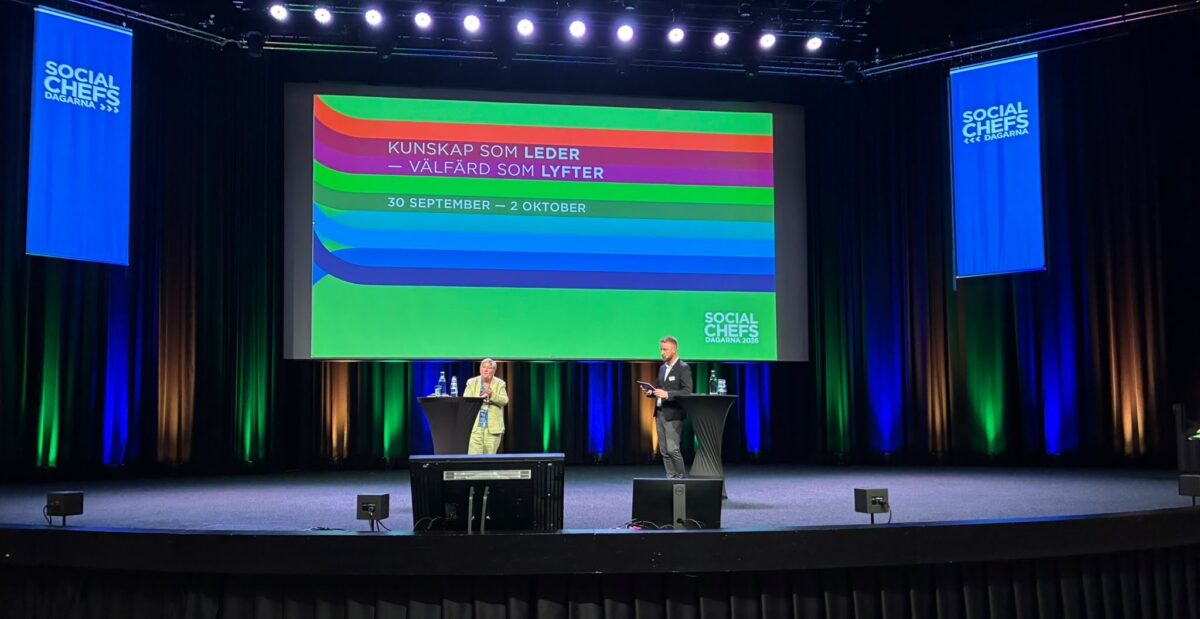
It’s a question Katie Kelly, chair of New Local, put to Sweden’s social services directors at Socialchefsdagarna 2026. Drawing on a transformation initiative in Scotland, she described what happens when power shifts closer to residents, while also changing perceptions of both employees and leadership.
Public services today operate in a context of financial pressure, changing societal needs and uncertainty.
“In England, we’re currently talking about Rewiring the State and finding new solutions beyond today’s welfare state. The system we have is neither financially sustainable nor delivering what people need. And I think the time is right for change,” she says.
“The transformation we need is about giving people and local communities greater power to shape their own lives and the places where they live. This can lead to better health, greater resilience and stronger trust.
“We know that health and wellbeing are created within local communities. People who have social connections and greater control over their own lives feel better, are healthier and live longer.”
From deficits to strengths
Katie described in her speech the system-wide transformation initiative known as Vibrant Communities in the Scottish council area of East Ayrshire, which ran for around 15 years. The council area had approximately 120,000 residents, 6,200 employees and 32 local communities.
The challenge was to meet significant budget-saving requirements while changing the relationship with people they serve.
“We started with this image of a dog being walked by a helicopter. The need is being met, but is it really the best way? Sometimes we create overly complicated solutions to help people,” says Katie, continuing:
“Together with the entire organisation, we began exploring other approaches – solutions that cost less but delivered better results. And these are often the most natural ones: where people help each other and professional intervention is kept to a minimum.
“The goal was to create a culture that strengthens people’s capabilities and agency, rather than making them dependent on public services.
“We do this by asking what works, what resources are available and what people can contribute. We move from seeing the people we help as passive clients to seeing them as active citizens.”
Putting people at the centre
One of the changes required is a shift away from a measurement-driven approach towards putting people, love and relationships at the centre.
“For us, that changed everything. And it’s not just about nice words – it influenced real decisions. There is a mutual dependence between us and the people we help, because without them, we wouldn’t have a job,” says Katie.
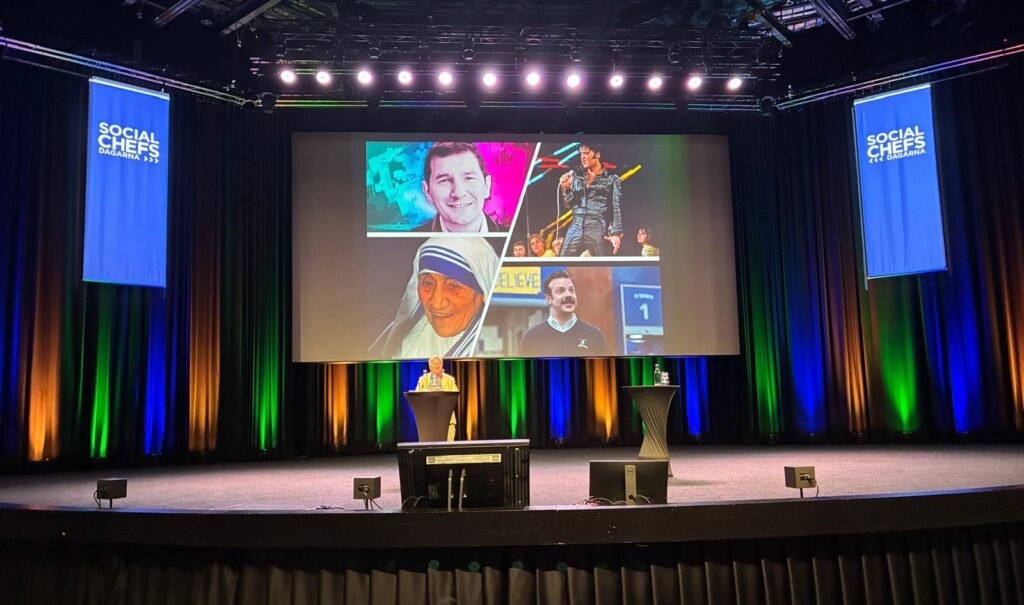
She presented work developed by Cormac Russell at Nurture Development outlining four different ways of working with people:
- Doing to – when professional intervention is genuinely needed.
- Doing for – when people receive a ready-made service.
- Doing with – when professionals and residents work together.
- Doing by – when people and local communities find their own solutions.
“All four approaches are needed. But we focused on how we could do more with local communities. And sometimes, perhaps no intervention is needed at all. As leaders in the public sector, we can sometimes make the greatest contribution by bringing people together, creating space and then stepping aside.”
Recognising opportunities and resources
Creating change requires capacity. Together with Cormac Russell, who spoke at last year’s Socialchefsdagarna conference and Brendan Martin from Public World, Katie Kelly has developed a new collaborative approach around Asset-Based Workforce Development.
“We asked all our employees: Why do you come to work? What can you contribute as a person, for the people who live in our communities? We wanted to find ways for people to contribute based on their skills, talents and abilities, not just their job descriptions,” she says.
This approach led, among other things, to two sanitation workers helping a woman with dementia – something that was not part of their job descriptions. The same approach was applied to residents, and once they started looking, they discovered an abundance of resources.
“We discovered people with skills who could also connect others. By asking new questions, we found new solutions. We also wanted to move away from a culture of seeking permission and started asking ourselves: What can we achieve together?” says Katie.
As part of the work in East Ayrshire, she also put out a call for so-called transformers: people who cared about their community, had ideas and wanted to contribute. Many applied, resulting in seven people from different parts of the organisation being brought together to build the capacity for sustainable change from within.
When local communities take power into their own hands
An important part of the initiative was for all 32 local communities to have the opportunity to develop their own action plans. Residents came together to talk about their hopes and dreams. They conducted surveys and spoke to businesses, schools and others in their areas.
The questions they considered were:
- What do we like about the place where we live?
- What do we like less?
- What can we do ourselves to change things?
- What support do we need?
“Together, they developed plans around what mattered to them. Some people didn’t believe it would work, but it did! People took responsibility for their own communities and started doing things themselves,” says Katie.
Initially, the focus was on planting flowers and improving outdoor spaces. Over time, however, local communities took over responsibility for buildings, sports facilities and community meeting places. Today, 29 action plans have been implemented. Some communities are now working on their third action plan.
“We transferred around 80 assets to local communities and saved several million pounds. But above all, local communities started looking after these assets better than we had done before. They also attract several million worth of investment from outside sources.”
Lead with trust
Creating change requires leaders to dare to let go of control, manage their fears and allow the organisation to learn by trying things out.
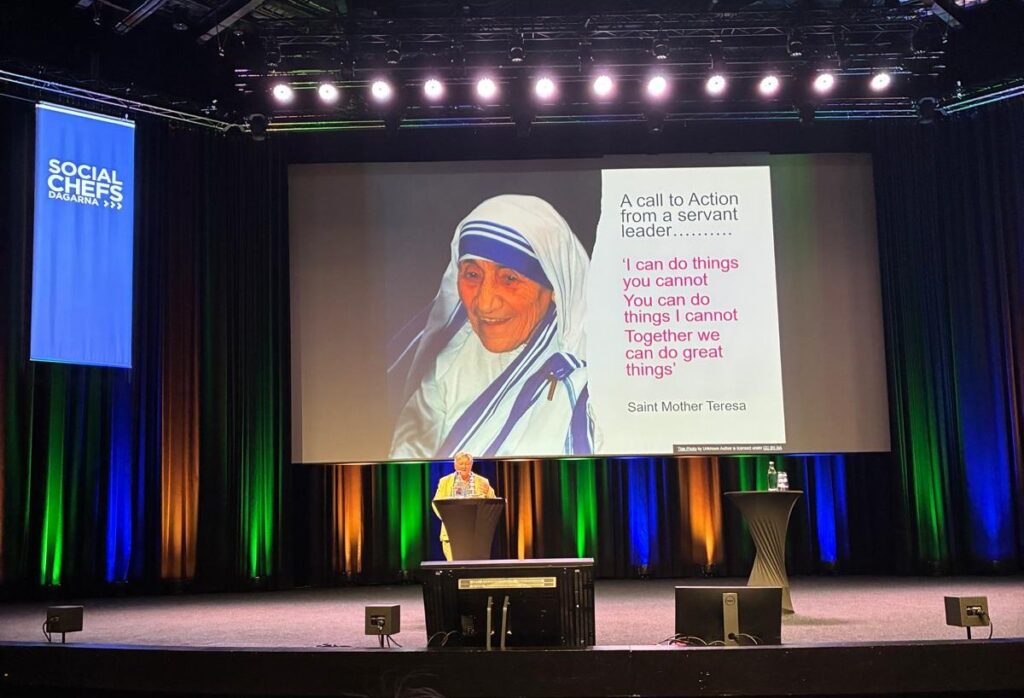
“Today’s leaders need to move away from the role of the reassuring figure who maintains the status quo and carries everything on their shoulders. We need to embrace collective leadership, where we share responsibility and work together,” says Katie.
In times of uncertainty, there needs to be room for innovation and new thinking. Leadership must therefore be adaptable, able to guide people even when we do not know exactly what lies ahead. In this culture, failure is seen as an opportunity to learn.
“We need to move from fear to trust. We often ask ourselves: What’s the worst that could happen? But what if we asked instead: What’s the best that could happen?”
We are often stuck in evidence-based thinking. But sometimes we need to start with an idea and be willing to take risks in order to develop innovative ways of working.
“Sometimes we become so preoccupied with proving that things work that we stop creating anything new. Evidence is important, but it must never become an argument for not trying something new. We can start with the end goal in mind and build our knowledge along the way.”
Interested in learning more about public service reform in Scotland? Read Katie’s latest article Rewiring the Scottish state.
Photos by Niklas Maupoix.
 Join our mailing list