Communities First
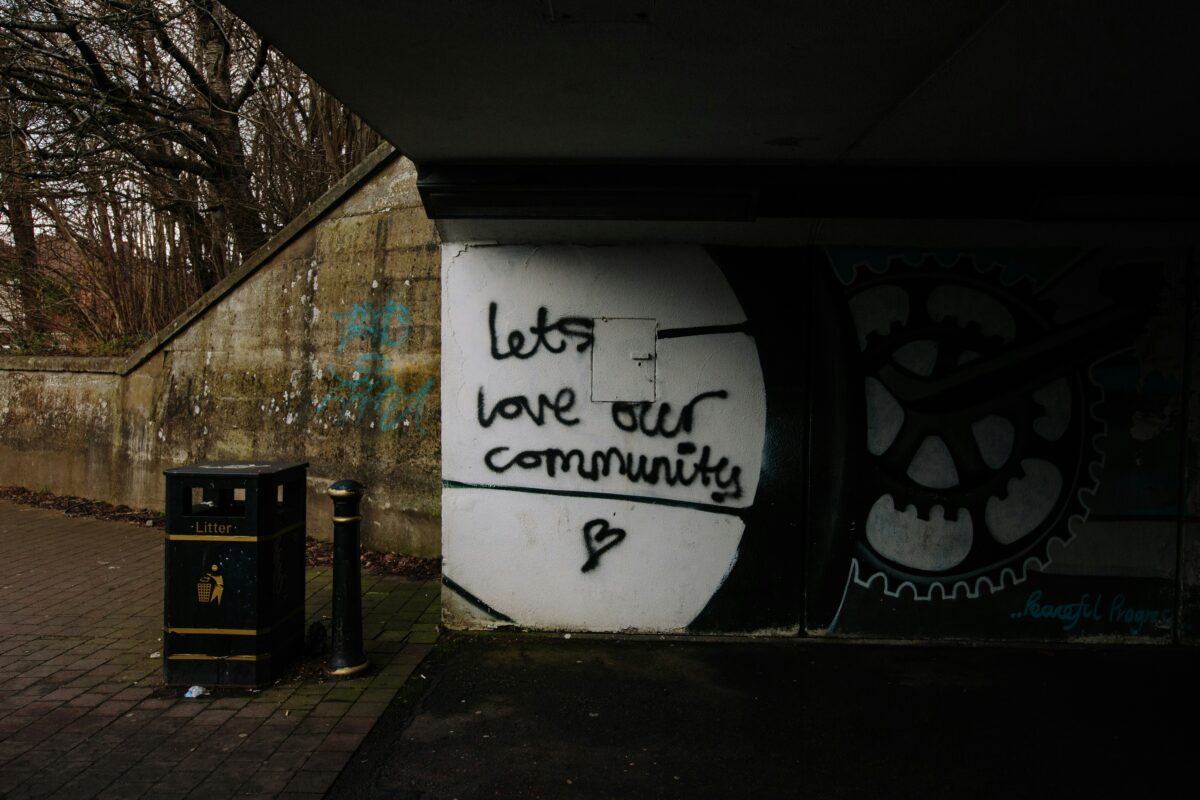
Over the last decade, community power has become increasingly important to discussions about the future of public services, local government and democratic renewal. Ahead of his keynote speech at Stronger Things 2026, The Rt Hon Steve Reed MP, Secretary of State for Housing, Communities and Local Government, has shared this essay setting out his own thinking on the intellectual foundations of community power and the implications for government.
Introduction
There have been many different approaches over the years calling for a better way of running our public services. In 1945 Labour advocated a Morrisonian public ownership model; in the 1960s Wilson had a scientific tri-partite model; Thatcher then Cameron pushed marketisation; Blair in 1997 had New Public Management and later the choice agenda. All of them tried to deliver better, cheaper outcomes that meet people’s real needs. Some have advocated a relational state, or a person-centred approach, and others have pushed for liberating public services. I enjoy reading these articles – indeed I’ve written a few of them myself and piloted a model based on co-production while I was a council leader. But in this essay I want to do something different. Rather than calling for a new approach, I want to describe a wave of progressive reform that is already unfolding across Britain. And I want to explain how and why our Labour Government will back this movement.
To show what I mean by this, I’ll start by describing the old way of doing things and why we should reject it. Then I’ll describe the problems we are facing and our new approach. Finally, I’ll address the critics of this approach, and I’ll end with a word to the real leaders of this work: people all across Britain, working day in, day out, to improve their local communities.
1. Rejecting the old ways of governing
Sometimes the best way to see something clearly is to contrast it with its opposite. So before I define our approach to putting communities in control, I’ll describe the approaches that came before.
As the Second World War came to an end, Britain was in ruins. Nearly 4 million people’s homes were damaged or destroyed by bombing, factories were in tatters, and the Home Front was worn out. When Labour came to power on a wave of optimism, it reached for the prevailing policies of the time: statism, influenced by the Webbs and Fabians and the development of a planned economy taking place in the Soviet Union. These ideas called for the creation of big national institutions under public ownership – like the National Coal Board, National Insurance, and nationalised energy, telecoms, and industry.
In many cases, they replaced a patchwork of threadbare, rapacious private sector stop gaps with decent, modern provision. But in some cases, they also wiped away a rich tapestry of self-organised working class institutions that had been built from the ground up. A network of friendly societies and mutuals had sprung up across working class Britain, such as the Tredegar Medical Aid Society that provided healthcare, or the Workers’ Educational Association that opened up learning to working class people. The country had a 150 year history of cooperatives dating from the Industrial Revolution, where ordinary people came together to provide good-quality food, banking and insurance to each other at a fair price, cutting out profiteers.
New monolithic national public services replaced them, and undoubtedly people’s lives improved dramatically as a result. But sometimes these new public institutions took a paternalistic approach to people and their lives, particularly in the form of the welfare state and the emerging profession of social work. There was a belief that Whitehall and professional elites knew best what people needed and people should therefore be allocated to services rather than be involved in shaping the services they wanted. Over time, communities lost the infrastructure and the ability to advocate and act for themselves, instead they became dependent on what was on offer from an expanding state, but when that was taken away it exposed just how weak communities had become.
In the 1980s, Thatcherism took an axe to that postwar legacy. Trade unionism and its cultures of working class solidarity and self reliance were crushed. Britain went further in privatising its essential services and public assets than almost any other developed country until the fall of the Eastern Bloc, with water, mail, and rail all sold off. An enthusiasm for consumer capitalism – the idea that we could own our essential services as individualistic investors – hid a vast transfer of wealth into the hands of an avaricious few. But despite all the government’s rhetoric, the proportion of GDP spent on welfare spiralled during Thatcher’s time in office because the country was violently deindustrialised, forcing millions out of work. I saw this for myself with the closure of the printworks where my dad, uncles, aunts, grandparents and most of their friends all worked. Some of them never found a decent job again, all of them experienced a profound sense of loss as their lives were torn apart with nothing to help put them back together again, and no preparation in life to cope without the job they’d always had and the community network that came with it.
Thatcherism began to develop its own market-led theory of how public services should be run. Its worldview remained broadly intact under New Labour, although of course it was put to far more progressive uses. It survived through the 2010s, in some senses becoming more accentuated, even as its limits became ever more apparent.
The approach is sometimes called New Public Management, but really it defies any one name. It conceives of government as a machine to solve problems – ameliorating, insuring, redistributing, medicating, regulating, and so on. It measures the capacity of public institutions by their ability to do things to people and for people: paying benefits, teaching children, treating illnesses. It works by making policies – laws, spending commitments, ‘interventions’ – and by delivering services. It judges its performance via engineering analogies: the efficiency with which inputs are converted into outputs, or the fidelity with which policies are implemented.
This post-Cold War way of governing was not, to be fair to its advocates, naive about the limits of top-down government. Yes, it had managerial tendencies – a culture of top-down targets, audits, and inspections – but it also used market mechanisms, allowing citizens to choose services, fostering competition between providers. It also pursued what was, for the time, a bold agenda of devolution, although in the main power was devolved to a few outposts of regional and national politicians, rather than directly to citizens.
As a mirror to all of this, the old statecraft had blindspots. It didn’t think much about agency, or about sentiments like dignity, control and belonging. In all, it had a thin conception of citizenship – citizens voted, and perhaps volunteered, and they might choose a school or hospital, but they were not involved in shaping or delivering services themselves, or helping to wrangle public policy problems.
This created a dependency of individuals and communities on whatever it was that was providing the services – whether public or private sector. People became passive recipients of services, rather than active shapers of them.
Perhaps the biggest failure of this way of governing – and the one that should most trouble progressives – is that it lacked a deep account of society. It was blind to relationships. It undervalued places – how people feel about the place they call home, and the importance of thriving local towns to a healthy and sustainable economy. It didn’t see that people are proud of their area and want it to flourish – that they aren’t floating economic units of production and consumption maximising their utility, but rooted fully rounded human beings who don’t want their kids to have to get out to get on.
I recognise the advances that were made in the postwar era and under New Labour. The gains that were made from 1997 to 2010 are well documented – low NHS waiting lists, historically low crime rates, drops in child and pensioner poverty, rising living standards. And the push for devolution and programmes like Total Place and the New Deal for Communities showed an understanding of the need to give local communities far greater power over decision-making, but they were unable to wrest more control of decisions away from Whitehall. This has led to one of the great tragedies of the last 15 years as incoming Conservative administrations found it so easy to recklessly reverse these gains.
That’s because, despite some attempts to redistribute power out to some communities – like devolution to Scotland, Wales, Northern Ireland, and London, they didn’t redistribute the power necessary for communities to hold onto that wealth or adapt to the changes reshaping their world and the challenges that has brought.
2. What are today’s problems?
Since the Second World War our country has become much more diverse, the population is more mobile, we live longer, social and technological change happens much faster, and people have much more choice over their life and lifestyle in everything from where they live, what they wear, where they work, how they socialise, learn, even how they meet their partner.
Nearly thirty years have passed since Labour’s victory in May 1997, and the world has kept changing. If anything, that change has made the case for communities even stronger. These can be pinned down to three broad shifts.
The first is a rise in the complexity of problems. If you look at the grand ills facing public services today, you see a tangled ball of messy challenges: managing chronic health conditions, anxiety and depression – especially among adolescents – long-term worklessness, community cohesion, the care crisis, and an associated crisis of loneliness.
These problems are often singled out for their complexity, but another thing they have in common is that they are human. They still require collective action; only the wildest free marketeer would think we can solve the care crisis, or mental illness, by leaving it to the market. Looking at the wrecked public services Labour inherited two years ago, it’s obvious that the profit motive alone can’t be relied on to keep standards high. Rampant profiteering has been allowed to take over the most basic services, with the 15 largest private providers of children’s social care making average annual operating profits of £45,000 per child in residential homes, forcing councils to spend sometimes over £1m a year on individual children. We do, clearly, need a state made capable again.
But these problems are also not amenable to what has historically been our main mode of collective action – the ‘centre knows best’ way of governing I described above. If you want to prevent diabetes, for example, or ease loneliness, you can’t do it to someone, or for them, however well you run public services. So we need to find more human ways to come together to make our lives better – ones that work with people, and are rooted in local communities.
This takes me to the second shift we saw in this period – a decline in civic life and in the capacity of local communities. This decline has been ongoing for decades but it accelerated post 2010, thanks to the decimation of civic infrastructure, from libraries to youth clubs. The latest evidence links a loss of civic and associational life with poor health outcomes, higher crime, and lower trust. It also shows stark geographic disparities, which worsens social mobility. Some places have vibrant communities and material wealth, while others have the opposite: the double disadvantage of low incomes and low civic capacity.
That made New Labour’s reliance on top-down fiscal transfers particularly problematic. When public money was stripped away during austerity, it became clear that New Labour hadn’t built a sustainable foundation of leadership and community capacity in local areas, and the progress it had made went into reverse. The weakness of our regional economies had been disguised by increased public sector headcount, not fundamentally fixed.
Of course, as a government, we are committed to reinvesting into our communities – billions more to shorten NHS waiting lists, build social homes, and public transport. But thirdly, we have to accept that we aren’t in the same moment in which New Labour came to power. The late 1990s saw a world-historical economic boom, caused by the opening up of China and the Eastern Bloc to global markets, and an unprecedented period of global stability. That isn’t the time we live in now. We live in a dangerous world and a country that was ransacked by 14 years of austerity. It is simply not in our gift to turn the taps back on and let the good times roll.
What is clear now is that these three trends are part of one story. The depletion of community life has fed a rise in complex social problems, just as it has denied us the capacity to respond to these problems, leaving us over-reliant on the machinery of bureaucratic government. Economic stagnation has worsened those social problems, just as it has closed off the possibility of solving our issues with public money alone. This, however, is where the story turns positive. Because across Britain, people have been hard at work reviving the energy of local communities, and finding new ways to make progress on complex problems, often despite the state rather than because of it. During the Covid pandemic we saw the flourishing of mutual aid groups across the country as communities rushed in to fill the gaps left by the state, forging human-scale bonds of support. We must now reform the state and our way of governing to put it back under the control of communities and stop holding people and areas back from achieving their true potential.
3. Communities First
We need a state that is not just modern and technically adept but also a state that makes space for, and gives power to, communities and service users because that leads to better services and stronger communities. Labour governments have often tended towards nationalisation and state provision of services, while the Conservatives have preferred market-led solutions. What they have in common is that they both emphasise the interest of the service provider rather than its users. But it’s the people who use public services whose interests should dominate. Labour can break out of the old state versus market dichotomy by championing the voice of the citizen or service user, emphasising the user interest over the provider interest. That means a new way of governing so people can take more control over the services and public decisions that affect their lives. Instead of doing things to people, the state must do things with people – and that requires deliberate action to build the capacity of people and communities to participate and lead.
What does this look like in practice? In the reports I mentioned at the outset of this essay, people have tended to name certain qualities we need from a 21st century state – being relational, enabling, liberating, or agile. Others have pushed for us to build specific new capacities – some say we need collective intelligence, others stress participatory methods..
I don’t disagree with these arguments. But I notice that one thing sits behind all of them. All of these agendas are animated by a deep and authentic belief in the power of human beings – a respect for their intelligence, ingenuity, and experience, and for the magic that happens when you trust people. They have faith – a genuine belief – in the power of people, in the right circumstances, to improve themselves and their communities. And, in this spirit, they are deeply curious about what those circumstances are, and about the ways in which people find meaning and motivation – our pride in the place we live, the relationships we value, and the things we feel: respect, dignity, belonging, a sense of identity.
This, for me, is the crux of it – and what was missing from the old statecraft. It had carried through too much of the paternalism of the earlier Fabian tradition, albeit modified by the 1980s recognition that people are also consumers. Democracy means giving power to the people, so this new agenda is also profoundly democratic because that’s precisely what it does.
At root, this is how I see the work we are doing: reimagining the state so that it respects, genuinely and to its core, the power of people. This means seeing people fully: not just as patients, consumers, service users, economic agents, voters with preferences and grievances, or problems to be solved – but as citizens. And it means, therefore, having a more imaginative and less disempowering view of government. Government is not a vending machine dispensing answers, selected by votes and paid for by taxes; it is a series of ways we work together, as citizens, to bring out the best in each other.
This was not the premise of the government we inherited. The claims of the Big Society or Levelling Up were, in the end, false ones. Volunteering and competitive bidding pots for chess tables cannot, it turns out, change a country if they leave power and resources in the hands of the establishment and communities shut out. Too many of our institutions and processes were built for an earlier, more technocratic mindset – ones that saw little worth in involving citizens and communities. So if we want a state that acts in this way, we have to build it and reshape the settlement between citizens and the state in favour of the people.
Since July 2024, this is the work we have started, and let me touch on a few initiatives that show what we are doing.
The first is devolution, but not in the way it’s been done in the past – not by passing down responsibilities without funding, nor by empowering unrepresentative business groups instead of local people. Yes, we need to push power down to local and regional government – pooling budgets, delegating decisions, giving more discretion. It is far easier to shape how the state works when that state is local and knows you and your area. And the only way we will overcome multiple decades of economic stagnation in some parts of the country is by trusting local leaders and putting the levers in their hand, so they can build locally rooted prosperity with fiscal devolution. But we also need to build up the capacity of communities themselves, and create space for people to step into, to exercise agency. Devolving power from national politicians to regional politicians isn’t enough on its own, we also need to devolve power directly to people and their communities. This is why our Pride in Place programme is putting £5.8 billion into our most under-served communities, as an endowment fund that’ll last decades. And it is why we are insisting that this work is not done to communities, but led by them – with a shift to full community leadership by year three.
The Pride in Place Programme puts control back in the hands of our communities but the funding only reaches the poorest 4% of the country. We need to give communities everywhere more power so they will never again be left vulnerable to the taps being turned off and losing the physical spaces where they gather. Earlier this year, I announced the Community Right to Buy, giving community groups the ability to own the pubs, youth clubs, empty shops, and community venues they want to save. Now we’re backing it up with a £61m fund. This learns from my time at Lambeth where I oversaw the country’s biggest community asset transfer when the old Lilian Baylis school site was handed to a representative community trust and is now run as a sports, education and cultural hub benefiting residents on a nearby housing estate in Kennington.
And it isn’t just about community spaces. It’s this line of thinking that inspired our commitment of up to £1 billion of funding for community and local energy projects – the single biggest investment into community energy in the history of the country. My experience helping to set up Repowering, the country’s biggest clean energy cooperative, in Brixton taught me that when communities are empowered to build their own economic assets, rather than waiting for big systems to give it to them, they get more control over their own lives.
Second, when we respect the insight and ingenuity of communities, we change the way we go about policy-making, and the way we use evidence. A state that doesn’t trust citizens or frontline workers is centralising – it pushes out diktats from an anxious centre to the edges. It consults thinly and performatively, when it already knows the answer it wants. By contrast, a state that believes in people sees citizens and frontline workers as a source of intelligence that we cannot afford to waste. That is the way of governing we need. One which pulls ideas in, listening deeply, and it uses what it learns to drive change up and through the system.
This is why our Test, Learn and Grow programme is turning public service reform upside down. Not implementing yet another top-down restructure designed in Whitehall, but building capacity to experiment in mixed discipline teams at the edges of the system, in local communities, and using what we are learning to change the system from below. It recognises the need for pooled budgets and all the other enabling factors of governing well, but doesn’t stop there – it uses them as a foundation for empowering service users and the frontline, not as an end in itself.
It’s why we’ve launched a new phase of the Changing Futures programme, so people facing multiple disadvantages, like homelessness, substance misuse, mental ill health, and other issues, aren’t bounced around the public sector, but get the proper, preventative public services they need. And it’s also why we support experiments in participatory and deliberative methods, like the WAVE pilots being undertaken by councils to boost digital democracy and resident engagement. as well as other ways to activate citizens, like the Citizen First Incubator in Liverpool. We can learn too from initiatives in other countries, such as Estonia’s pioneering work on digitising access to public services, or vTaiwan, a platform that brings citizens, government and experts together to build consensus on national policies. Methods that empower people must become the norm in government, not the exception.
The third way we show trust in people is by changing the culture and practice of public service. We can free frontline workers, respecting their knowledge and giving them space to do the little things that make a big difference, and to form deep relationships. This is why, in healthcare, we are pursuing a neighbourhood health service and recruiting thousands of community link workers. It is also why we back the brilliant work that is happening to spread relational practice, from Camden’s Centre of Relational Practice, the work of The Relationships Project, Plymouth’s work on a human learning systems approach, to brilliant relationship-based care services, like Juno in Liverpool.
The goal is to put the system back in service of people. Too often these days our public institutions – ones that we are rightly proud of, as a Labour government – seem to have developed a life of their own. People say ‘it’s not me, it’s the system’. Or that most infuriating of phrases, ‘it’s just the policy, it’s not up to me’ – the computer says no. Public institutions have ossified from being what they were originally supposed to be – vehicles for the realization of our collective ambitions – to self-preserving organisations that seek to protect and enhance their own power rather than the people they were set up to serve. And across the state, important processes – procurement, commissioning, evaluations – have become barriers, not enablers, of good outcomes for human beings.
This is why, in addition to the work I’ve described above, we have started the hard and unglamorous work of rewiring government, changing processes like commissioning and procurement and utilising technological advances. This is not about dismantling the state, as some on the right would do, but making sure it is focused on the right things.
We cannot outsource the task of leading healthy lives, or building happy communities, to someone in a department in Westminster or a town hall. And we should not be buying care services with the same procurement process we use to buy toilet rolls, as most councils still do today. That’s one reason why involving the people who use services in shaping them can be a source of innovation, not delay. It’s the motivation behind our new Community Power Pilots, which will give people a chance to rip up the rulebook and redesign the services they use.
If our job is to replace a distant, bureaucratic state with a more human one, to devolve power, and back people to improve their own lives and neighbourhoods, we need to be far more radical.
Governments have too often been convinced by technocratic arguments that mistrust anyone outside the Whitehall system. The idea that the centre always knows best is an illusion. If it did, the country and our communities would not be in the state we find them in today. Our job as progressive politicians, on taking power, is to give it away. We need to govern like insurgents, not spend our days tinkering with a broken status quo. Picking up an aspiration that’s been at the core of the Labour movement since its birth, we must shift power to the people.
4. The counter arguments
I’ve made the case for a more human state, one that has communities at its heart, and respects people. With evidence that in areas like care, community mental health, entrenched worklessness, loneliness, and a broad swathe of preventative work the way to deliver cheaper, effective and popular services is putting the community in control. However, I still meet people who are sceptical about community involvement. In the years I have spent engaged with this work, since leading Lambeth council in the late 2000s, I’ve noticed three common arguments.
The first is that communities might get things wrong. This is a view often expressed by politicians who feel they alone should be in control – ‘we have been elected to decide’. In response, I would encourage people to look at how much the state has got wrong from declining high streets to grooming gangs; why people are so frustrated that voting for change never seems to bring it. While community-led work, in areas from mental health, to social care or tackling youth offending, not only reduces the problem but strengthens the community doing it. The story of recent decades is of politicians trying to grip levers of change ever more tightly, making endless announcements, piling ever more taxpayers’ money in, with little to show for it.
There are the places in Britain that have made real progress in these complex areas, and that have begun to see a deeper transformation even in the face of cuts in budgets. They are places like Wigan, Grimsby, Camden, Hastings, and around Union Street in Plymouth – pioneers in community-led methods. And there is work like the Live Well initiative in Greater Manchester, which is making space for proper community-led preventative healthcare. In all these cases, deliverology is being out-delivered.
The second concern people raise is of postcode lotteries: that if we let communities lead, outcomes will vary. A worry about equity runs through Labour history and many of our proudest moments – the early Fabian reform of the Poor Laws, the Beveridge welfare settlement, the NHS – achieved fairness via national standards.
There are two responses to this concern.
The first, and perhaps most important is that we are nowhere close to delivering equity at the moment. Look at the most damning of all statistics: the 18-year gap in healthy life expectancy between people who live in rich and poor areas. This is a scandal of historic proportions. But what drives this? It is not differing standards – NHS care varies, but not nearly this much. What drives it is economic inequality and a lack of opportunity for communities to help design and deliver the services they need and want . We cannot mandate our way to equal life expectancy – we can only get there by cultivating healthy communities.
The second is that I am not advocating local discretion for everything. No-one really thinks that government can be fully one thing or the other – run wholly with NPM’s managers and markets, or given over totally to community leadership. Everyone wants the bins emptied on time and the country kept safe from external threats; that isn’t where community leadership needs to dominate.
There are areas of government where we rightly cede authority to expert or universal policies: fundamental science, clean and tidy public realm, defence. And even in areas where communities can play a far bigger role – in public services, and social policy domains like welfare and worklessness – there is a place for technocratic and universal methods. This shared bedrock of citizenship has always been central.
That’s why we are rebuilding a foundation of state capacity that communities everywhere can rely on. That means investing in our starved public services, but it also means fixing the broken systems left behind by the vandals who occupied our government for 14 years. In children’s social care, for example, instead of an untrammelled marketplace dominated by private equity, free to profiteer from councils and vulnerable children, we’re creating a system of regional cooperation to strengthen the public’s hand, backed up by a profit cap to prevent wealth extraction.
Finally, people worry about another aspect of equity, more related to political voice. People say citizen involvement is a charter for the sharp-elbowed middle classes, who will dominate local decisions and overpower local representative democracy.
But that’s not what I saw in Lambeth when I helped a residents group in Brixton take over their housing estate then saw standards dramatically improve as managers reported to an elected residents’ board instead of to directors in the town hall. And it’s not what I saw when disabled people were helped to spend a personalised budget on support they helped design for themselves rather than being allocated to services that didn’t really meet their needs.
The best participatory and deliberative methods are not just equitable; they actively increase equality. Take the Citizen Incubator in Liverpool – a wonderful example of activating citizens. They had 214 applications for nine places, 90 percent of whom had experience of economic disadvantage. And thanks to programmes like Big Local, we know how to cultivate community capacity where it is depleted. I would argue that the risk has now flipped: the sharp-elbowed are far more likely to dominate democracy’s more traditional processes – long and intimidating meetings, indecipherable agendas, arcane planning regulations – than they are to dominate the best work of community-led development, often built on principles of coproduction that ensures all relevant voices get a hearing.
In traditional models, people with specific needs are allocated to services that may or may not meet those needs, with politicians mediating in the middle. With community power models, we use different forms of co-production to identify the outcomes people want to achieve, the intervention to achieve it, and even who will provide that intervention. The role of the local state is to make sure this decision-making or commissioning model works effectively, that we build the infrastructure and capacity of communities to participate, and that vulnerable people are supported to articulate their own aspirations. So while I don’t dismiss any of these concerns, they are not reasons to stick with a failed status quo, but reasons to make sure we operate the new system well.
It is already happening
I said at the start of this article that our agenda is not like previous reform agendas. We will not embark on top down restructures that prompt arguments that fill the news, or make endless speeches announcing wheezes designed in Whitehall. Instead, at our best, we are doing this work in a way that is consistent with its spirit. That government cannot and does not change places alone. We have listened closely to the brilliant work that is happening in communities all across Britain – some of us for many years, from my experience leading Lambeth Council, to Georgia Gould’s leadership of Camden Council – and we have asked: what does this movement need? How can the state come in behind it?
One of the great powers of civil society is that people are impatient. Long before we came to power, this work was already happening. People have done what they always do in tough times, when old methods become outmoded: they have developed new ones. Across Britain and the world there is now a mature movement practising the approaches I have described.
This is the movement we are backing. It includes pioneering places – Wigan, Camden, Sheffield, Barking and Dagenham; and Strategic Authorities like Greater Manchester, the West Midlands, and Liverpool City Region. Community-led efforts, from Grimsby to Hastings to Plymouth, leading change from the ground up. Organisations – Collaborate, The Relationships Project, Platform Places, Place Matters, and of course, New Local – supporting practitioners. Public service reformers, like Big Education and Reach Multi-academy Trust, supporting a civic approach to school leadership. Networks of practitioners – A Better Way, the Mycelial Network, Human Learning Systems. And, across the country, pioneering services, from Navigo’s pioneering integrated mental health support in Northeast Lincolnshire, to Juno’s care for children in Liverpool.
People leading this work have had to battle against the system to make it work better for too long. Battling to do social care in a way that sees the person in front of them. Battling to reclaim empty buildings from delinquent owners to turn them into community centres. Battling to provide mental health services in a holistic way while being drowned in risk registers and reporting requirements. Imagine how much more powerful this work would be if the system ran with it, not against it. That is our agenda, that is how we will deliver change you can feel in every community up and down the land.
We are going to put communities in control.
Steve Reed MP is Secretary of State for Housing, Communities and Local Government. This essay is published by New Local as a contribution to debate about community power and public service reform. The views expressed are those of the author.
 Join our mailing list